

Religions are collapsing in the information age is not a sign of moral decline.
It is a structural transition.
Across the world, organized religions are losing authority. At the same time, anxiety, confusion, and emotional instability appear to be rising. Many interpret this as social decay. Others claim this is the inevitable aftermath of moving away from religion.
It is not.
It is the middle phase of a shift humanity has never experienced at this scale before.
Religion was a Psychological Structure, Not Just a Belief
For most of human history, religion was not optional. It was the framework through which life was understood.
Religion provided:
- meaning in suffering
- explanations for uncertainty
- moral boundaries
- emotional reassurance
- a sense of belonging
Most importantly, it provided psychological stability.
When fear arose, religion absorbed it. When guilt appeared, religion explained it. When life felt unfair, religion justified it.
This does not make religion “wrong.” It made it functional for its time.
Why Belief Thrived in the Past
Belief systems thrive in closed environments.
When information is limited, belief thrives. When the authority is not questioned, belief feels stable. When no alternatives are visible, belief feels complete.
For centuries, people did not compare religions. They inherited them.
Belief was not chosen. It was absorbed.
In such conditions, belief provided order.
Why Belief Cannot Survive the Information Age
The information age shattered closed systems.
Today, anyone can:
- compare religions instantly
- read contradictions side by side
- question religious-authority publicly
- access scientific, philosophical, and psychological perspectives together
Belief depends on certainty. The availability information produces comparisons.
Comparison dissolves certainty.
Religion is not collapsing because it is attacked. It is collapsing because it is exposed.
Borrowed truths do not survive open inquiry.
Why People are not Replacing Religion with Spirituality
This is the most misunderstood part of the transition.
People are leaving religion, but they are not immediately arriving at clarity.
They drop:
- belief
- ritual
- authority
- moral instructions
But they have not yet developed:
- self-observation
- inner responsibility
- emotional clarity
- direct understanding
This creates an in-between phase.
No belief to hold onto. No awareness to stabilize.
This is where instability appears.
The Psychological Vacuum After Belief
Religion quietly handled fear for people.
When belief collapses, fear does not disappear. It surfaces.
Earlier, anxiety could be handed over to God. Now it remains personal.
Earlier, guilt could be absolved. Now it circulates internally.
Earlier, suffering had meaning. Now it feels random.
This does not mean people are weaker.
It means the emotional shock absorbers that existed have been removed.
Why Anxiety, Stress, and Chaos are Increasing
Modern psychology aligns with this observation.
When common explanations about life, purpose, and right vs wrong fade, anxiety rises. Without inner grounding, people become reactive. Constant comparison feeds insecurity.
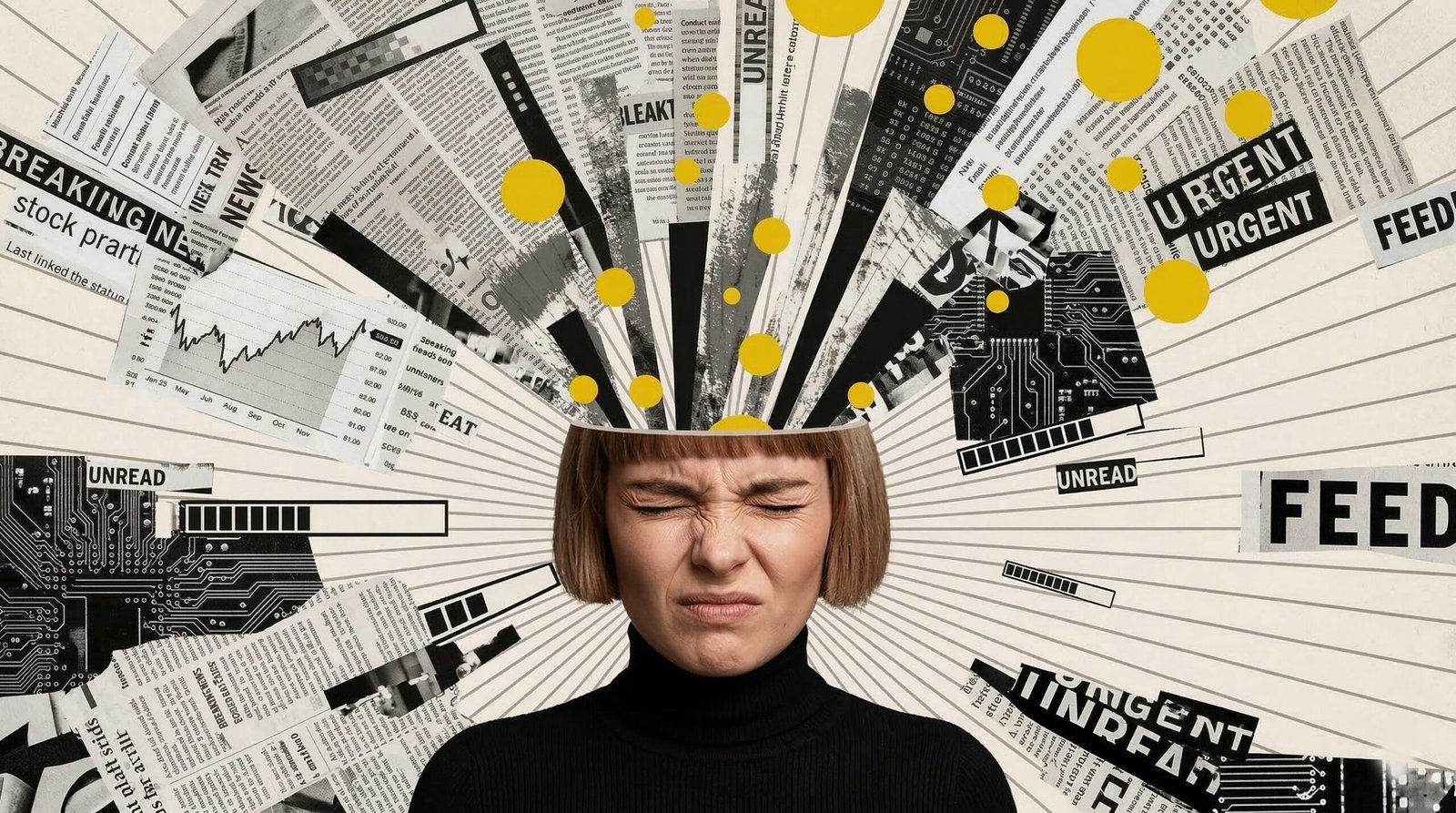
Social media intensifies this by:
- overstimulating the nervous system
- eroding attention
- fragmenting identity
Religion once slowed life. Now everything accelerates.
People are not breaking down — they are overstimulated, unsupported, and inwardly untrained.
This is not a collapse — It is Reorganization
Every major human transition looks chaotic in the middle.
When old maps stop working and new ones are not yet clear, confusion peaks.
This phase is temporary.
What is dissolving is not morality or meaning — it is outsourced meaning that was falsely imposed on humans.
What is emerging is responsibility.
From External Authority to Internal Stability
Religion provided order from the outside.
Awareness creates order from within.
This is a slower process and requires a more dedicated effort.
External rules can be enforced instantly. Internal clarity must be developed.
This delay creates the appearance of disorder.
But once inner clarity forms, it is far more stable than belief.
This transition is introduced in the companion article:
Spirituality and Religion: Are They Really the Same?
Why Responsibility Is the Next Foundation
Belief allowed blame.
Responsibility removes excuses.
When something goes wrong, there is no fate to accuse, no God to negotiate with, no doctrine to hide behind. It’s straight on you – a consequence of your action.
This feels harsh initially.
But it is the beginning of maturity.
A responsible human does not need a threat or a promise to act wisely.
Why this Transition will Settle
Humans cannot live long without meaning.
If belief collapses and clarity does not rise, suffering increases until attention turns inward.
We are already seeing this shift:
- therapy replacing confession
- meditation replacing prayer
- self-inquiry replacing doctrine
- responsibility replacing fate
This is not rebellion.
It is evolution.
Science and Spirituality Meeting Again
Science explains the external world.
Spirituality explores internal experience.
For the first time, these two are in dialogue.
Mindfulness, meditation, and awareness are now studied — not believed.
Truth no longer needs protection.
Take-Home Clarity
- Religions are collapsing because belief cannot survive transparency
- Chaos increases when belief dissolves before clarity develops
- Many people are temporarily ungrounded, not broken
- This is a transitional phase, not a decline
- Responsibility and awareness are the next stabilizing forces
What looks like disorder is a system learning to stand without crutches.
And learning to stand always looks unstable before it becomes steady.
Frequently Asked Questions
1. Why are religions collapsing in the information age?
Religions are collapsing in the information age because belief systems cannot survive open access to information, comparison, and questioning. What once relied on authority now faces transparency.
2. Does the decline of religion mean society is becoming worse?
No. The decline of religion does not indicate moral decay. It signals a transition where old belief-based structures dissolve before new forms of inner clarity and responsibility are fully developed.
3. Why is anxiety and stress increasing as religion declines?
Religion previously provided shared meaning and emotional reassurance. When these disappear before people develop inner grounding, fear and uncertainty surface as anxiety and stress.
4. Are people becoming less moral without religion?
Not necessarily. What is fading is obedience-based morality. What is emerging is responsibility-based morality, where actions arise from understanding rather than fear or reward.
5. Why do many people feel lost after leaving religion?
Many people leave belief systems without yet developing awareness or self-understanding. This creates an in-between phase with no external framework and no internal stability.
6. Is spirituality replacing religion?
Not immediately. Many people leave religion long before discovering clarity or awareness. Spirituality, as direct self-observation, develops slowly and cannot be inherited like belief.
7. Will this chaos settle in the future?
Yes. As awareness, responsibility, and inner clarity grow, stability returns. What looks like chaos now is a temporary adjustment as humanity learns to live without borrowed certainty.