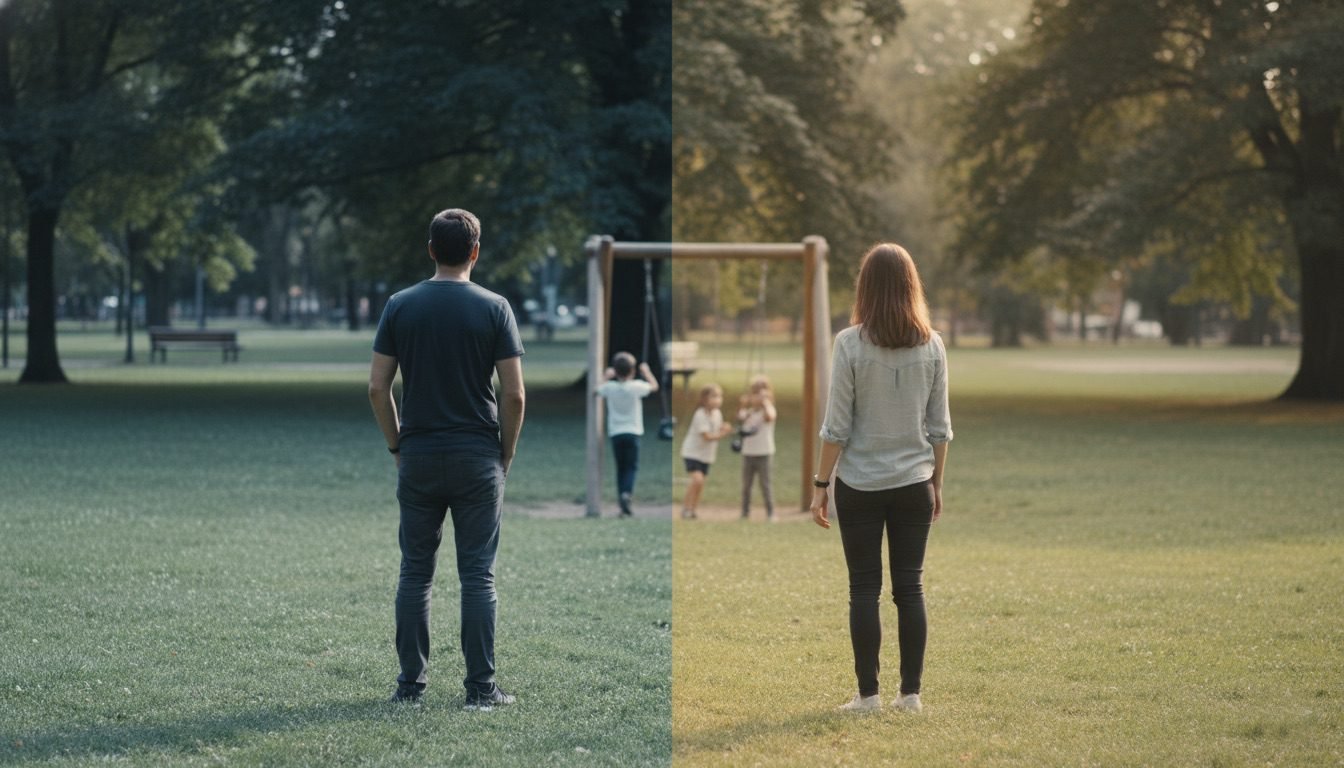

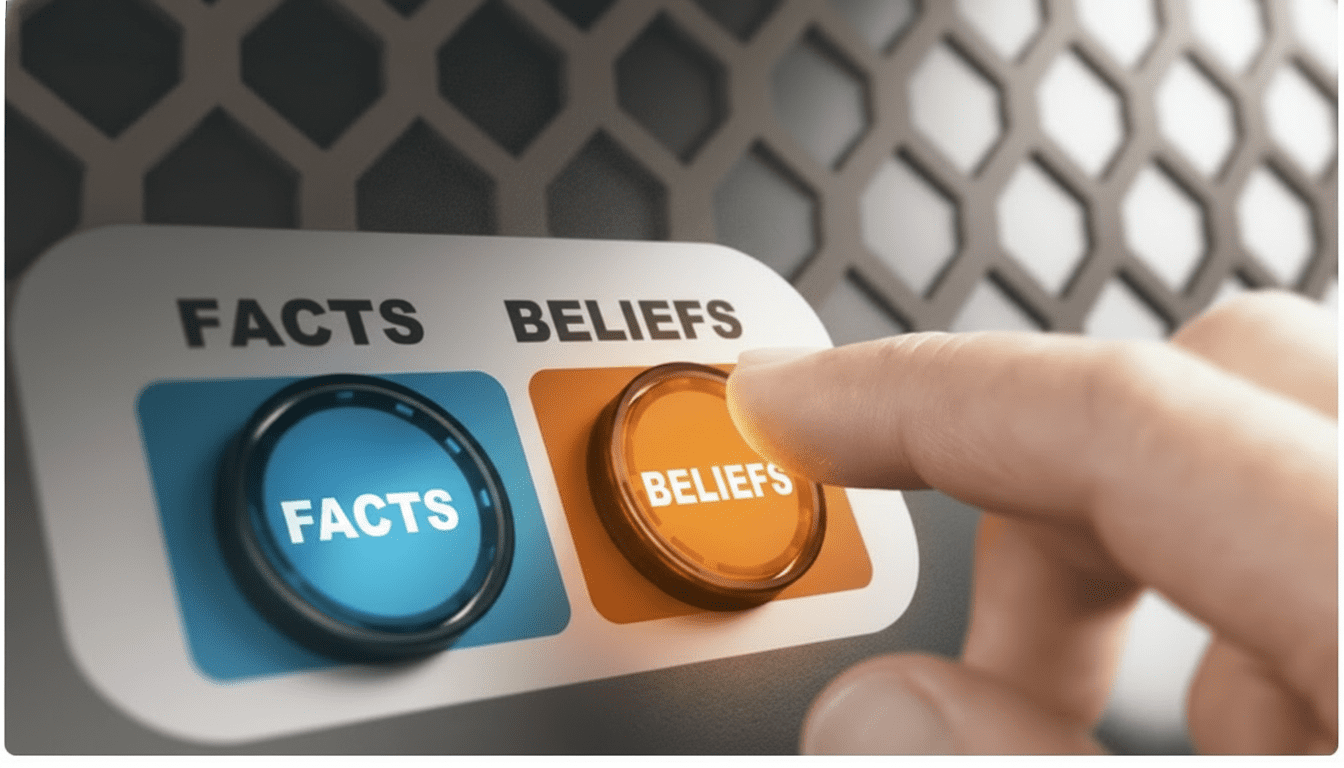
Most people believe they see reality clearly.
But often, the mind quietly filters reality to protect what it already believes.
Confirmation bias examples are everywhere in daily life, even though most people never notice them consciously.
- A phone call gets ignored once and suddenly you believe someone does not care about you.
- One criticism at work feels bigger than ten compliments.
- A delayed reply becomes “proof” that a relationship is failing.
- A politician from your side makes a mistake and your mind instantly explains it away, while the same mistake from the opposite side feels unforgivable.
The mind quietly collects evidence that supports what it already believes.
Most people think they are seeing reality clearly.
But often, the brain is filtering reality through existing emotional beliefs and assumptions.
This is called confirmation bias.
And once you begin seeing how it operates, you start understanding why people repeat emotional patterns, misunderstandings, fears, and unnecessary suffering throughout life.
What Is Confirmation Bias?
Confirmation bias is the mind’s tendency to notice information that supports existing beliefs while ignoring information that contradicts them.
In simple words:
The mind often sees what it already expects to see.
The American Psychological Association defines confirmation bias as the tendency to seek or interpret information in ways that confirm existing beliefs or expectations.
This happens constantly in daily life.
If someone already believes:
- “My boss does not like me”
- “People are selfish”
- “Nobody respects me”
- “I always fail”
- “Relationships never work out for me”
The brain quietly begins collecting evidence to support those beliefs automatically.
And the dangerous part is:
most people never realize this filtering process is happening.
Your Brain Looks For Proof, Not Truth
This is where confirmation bias becomes dangerous.
The mind often behaves less like a judge and more like a lawyer.
A judge listens to both sides carefully before reaching a conclusion.
A lawyer picks one side first and then starts building the case to defend it.
That is exactly what the brain quietly does every day.
For example, imagine someone strongly believes their boss dislikes them.
Now notice what happens.
If the boss says good morning politely every day, the mind ignores it.
If the boss appreciates their work once, the mind dismisses it as “formal behavior.”
But if the boss forgets to reply to one message, suddenly the brain reacts:
“See? I knew it.”
The mind selectively collects supporting evidence while filtering out contradictory evidence.
This is not objective observation.
It is psychological filtering.
And once emotional beliefs become strong enough, people stop seeing situations clearly.
This connects deeply with how the mind automatically interprets reality through existing conditioning, explored further in See the Mind Clearly Before You Trust It.
Confirmation Bias Examples In Relationships
Confirmation bias quietly shapes many relationship problems.
For example, imagine someone who already believes:
“My partner does not truly care about me.”
Now the brain begins filtering reality through that belief.
A delayed reply feels emotionally significant.
A tired tone sounds intentional.
A forgotten call feels like rejection.
But moments of care often get ignored because they do not support the existing belief.
This is one reason emotional misunderstandings repeat so often.
People are not only reacting to the present moment.
They are reacting to the story already running inside the mind.
Another common example is someone who grew up feeling emotionally ignored during childhood.
As adults, they may unconsciously expect emotional rejection in relationships.
So even neutral situations begin feeling emotionally threatening.
The mind starts collecting “evidence” to support the old emotional belief repeatedly.
This is why many emotional patterns repeat across different relationships.
The external people may change.
But the internal filter often remains the same.
This also connects strongly with how emotional stories shape perception internally, explored further in Break the Inner Story.
How Confirmation Bias Distorts Self-Image
Confirmation bias does not only affect how we see others.
It also affects how we see ourselves.
For example, someone who internally believes:
“I am not good enough.”
will often begin collecting evidence to support that belief unconsciously.
One failure becomes emotionally magnified.
One rejection feels deeply personal.
One criticism gets remembered for weeks.
Meanwhile:
- success gets minimized
- compliments feel uncomfortable
- progress gets ignored
- positive feedback gets dismissed
The mind quietly protects the existing identity.
Even painful beliefs can start feeling psychologically “safe” simply because they are familiar.
This is one reason negative thinking often becomes self-reinforcing over time.
The brain keeps searching for proof that the existing self-image is true.
Why The Mind Protects Existing Beliefs
The deeper issue behind confirmation bias is not intelligence.
It is psychological attachment.
The mind becomes emotionally attached to certainty.
Being “right” feels psychologically safe.
Changing beliefs can feel uncomfortable because it threatens identity.
This is why people often defend beliefs emotionally even when evidence clearly contradicts them.
The brain prefers emotional certainty over uncertainty.
And once identity becomes attached to a belief, observation weakens.
Defensiveness increases.
This happens everywhere:
- relationships
- politics
- religion
- money decisions
- parenting
- self-image
- social media discussions
People stop asking:
“What is true?”
And start unconsciously asking:
“How do I defend what I already believe?”
How Confirmation Bias Shapes Politics And Religion
Confirmation bias becomes especially powerful when beliefs become connected to identity.
This is why politics and religion often become emotionally charged so quickly.
Once someone strongly identifies with a political ideology or religious belief, the mind begins protecting that identity automatically.
People start accepting information that supports their side while dismissing anything that challenges it.
If a politician from their side behaves badly, the mind quickly explains it away.
But if someone from the opposite side makes the same mistake, it becomes “proof” that the other group is wrong or dangerous.
The same thing often happens in religion.
People may ignore hypocrisy, manipulation, or contradiction inside their own belief system while becoming highly sensitive to flaws in other religions or ideologies.
This does not usually happen because people are intentionally dishonest.
It happens because the mind becomes emotionally attached to protecting what feels familiar and psychologically safe.
Over time, identity becomes stronger than observation.
And once identity becomes deeply involved, questioning beliefs can start feeling like a personal attack rather than an opportunity to see more clearly.
This is one reason meaningful conversations around politics and religion often become difficult.
People are no longer simply discussing ideas.
They are unconsciously defending identity.
Social media algorithms intensify this even further by repeatedly showing people content that matches what they already believe.
This creates echo chambers where existing opinions keep getting emotionally reinforced again and again.
The result is that many people slowly stop observing reality directly.
They begin seeing reality mainly through mental filters built from identity, fear, conditioning, and repeated reinforcement.
This is why real awareness requires the ability to question even our own strongest beliefs honestly.
Not to become confused.
Not to become passive.
But to prevent the mind from becoming completely trapped inside its own conclusions.
How Social Media Strengthens Confirmation Bias
Modern social media algorithms heavily reinforce confirmation bias.
Platforms learn what people emotionally react to and keep showing similar content repeatedly.
Over time, people get trapped inside information bubbles that constantly reinforce existing beliefs.
This creates echo chambers.
The more one-sided information someone consumes, the more emotionally certain their opinions begin feeling.
And the less willing they become to question themselves.
The Britannica explanation of confirmation bias discusses how people naturally favor information that supports existing beliefs.
Social media amplifies this tendency massively.
This is also why outrage spreads so easily online.
Emotionally charged content reinforces identity faster than calm observation does.
And slowly, people stop seeing reality directly.
They begin seeing reality through emotionally reinforced mental filters.
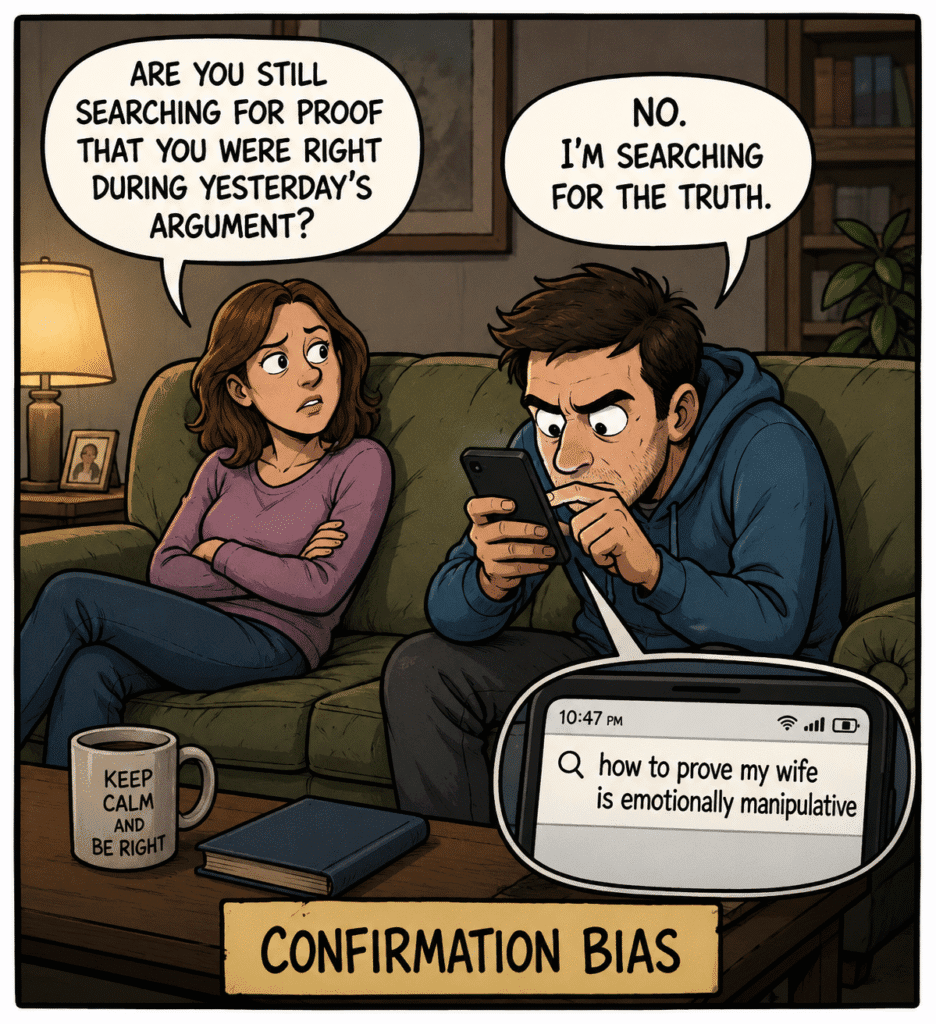
Confirmation bias often makes the mind defend existing beliefs instead of observing reality clearly.
The mind often calls it “searching for truth” while quietly searching for proof that it was already right.
The Real Danger Of Confirmation Bias
The real danger is not simply “being wrong.”
The real danger is losing the ability to see clearly.
Once the mind becomes deeply attached to a belief, observation becomes distorted.
Neutral situations start feeling personal.
People begin reacting more to their interpretations than to reality itself.
This creates unnecessary emotional suffering.
Many conflicts continue not because reality is always painful, but because the mind keeps reinforcing the same emotional conclusions repeatedly.
Over time, people stop questioning their assumptions completely.
And this is where unconscious mental autopilot quietly takes over daily life.
This connects deeply with learning to pause automatic mental reactions instead of immediately believing them, explored in How to Pause the Mind’s Automatic Reactions.
How To Break Confirmation Bias
The first step is becoming willing to question your own certainty.
Not constantly doubting yourself in an unhealthy way.
But honestly remaining open to the possibility that you may not be seeing the full picture.
The next time you strongly believe something, pause and ask:
- What if I am wrong?
- What am I not seeing?
- What evidence contradicts my belief?
- Am I observing reality clearly or defending an existing identity?
That pause matters deeply.
Because awareness begins the moment automatic certainty weakens.
You start noticing how quickly the mind jumps to emotional conclusions.
And slowly, observation becomes clearer than reaction.
This is not about becoming passive.
It is about seeing reality more honestly instead of automatically filtering it through old mental patterns.
And that ability to correct yourself internally is one of the rarest forms of intelligence.
Awareness Begins When Defensiveness Ends
Most people believe awareness means collecting more knowledge.
But often awareness begins when the mind becomes less defensive about what it already believes.
Truth becomes visible only when the mind stops trying to protect its existing conclusions constantly.
That does not mean you become weak.
It means you become more honest internally.
You stop automatically believing every emotional interpretation the mind creates.
And that changes the entire relationship with thought itself.
You stop becoming trapped inside mental stories automatically.
You begin observing them consciously.
That is where clarity quietly begins.
Key Takeaways
- Confirmation bias makes the mind search for proof instead of truth.
- The brain often filters reality to support existing beliefs.
- Confirmation bias strongly affects relationships, self-image, and emotional reactions.
- Social media algorithms heavily reinforce confirmation bias.
- Awareness begins when we honestly question our own certainty.
- Clear observation becomes possible when defensiveness weakens.
The mind feels safest when it feels certain.
But clarity begins the moment you become willing to see what you may have been missing all along.
Frequently Asked Questions
What is confirmation bias in simple words?
Confirmation bias is the tendency to notice information that supports existing beliefs while ignoring information that contradicts them. The mind unconsciously searches for proof that what it already believes is true.
What is a real life example of confirmation bias?
A real life example of confirmation bias is when someone strongly supports a political party or religious belief and then automatically defends everything connected to it, even when clear mistakes or contradictions appear.
If a politician from their side lies, the mind quickly explains it away or searches for justification.
But if someone from the opposite side makes a smaller mistake, it suddenly becomes “proof” that the other side is dangerous or dishonest.
The mind selectively accepts information that supports existing beliefs while ignoring information that challenges them.
How does confirmation bias affect relationships?
Confirmation bias affects relationships by making people interpret situations through existing emotional beliefs. Someone who already expects rejection may unconsciously interpret neutral situations as signs that others do not care about them.
Why does the brain use confirmation bias?
The brain uses confirmation bias because certainty feels psychologically safe. The mind prefers familiar beliefs because questioning them can feel emotionally uncomfortable or threatening to identity.
Can confirmation bias affect self-image?
Yes. Confirmation bias strongly affects self-image. Someone who believes they are not good enough may unconsciously focus more on failures and criticism while ignoring success, appreciation, or progress.
How does social media strengthen confirmation bias?
Social media strengthens confirmation bias by repeatedly showing people content similar to what they already believe or emotionally react to. This creates echo chambers that reinforce existing opinions and emotional certainty.
How can someone reduce confirmation bias?
Confirmation bias can be reduced through self-awareness and honest questioning. Asking “What if I am wrong?” or “What am I not seeing?” helps weaken automatic mental filtering and improves clarity.
Why is confirmation bias dangerous?
Confirmation bias becomes dangerous when people stop seeing reality clearly and begin reacting mainly through emotional assumptions. This can create misunderstandings, distorted self-image, unnecessary conflict, and repeated emotional suffering.
The mind can become so busy defending what it already believes that it quietly stops seeing what is actually there.
And sometimes, the greatest form of intelligence is the willingness to question yourself honestly.