

A clear look at how reality is created inside you — and why most conflict, fear, and confusion come from forgetting this.
Mind creates reality in ways most people never stop to notice.
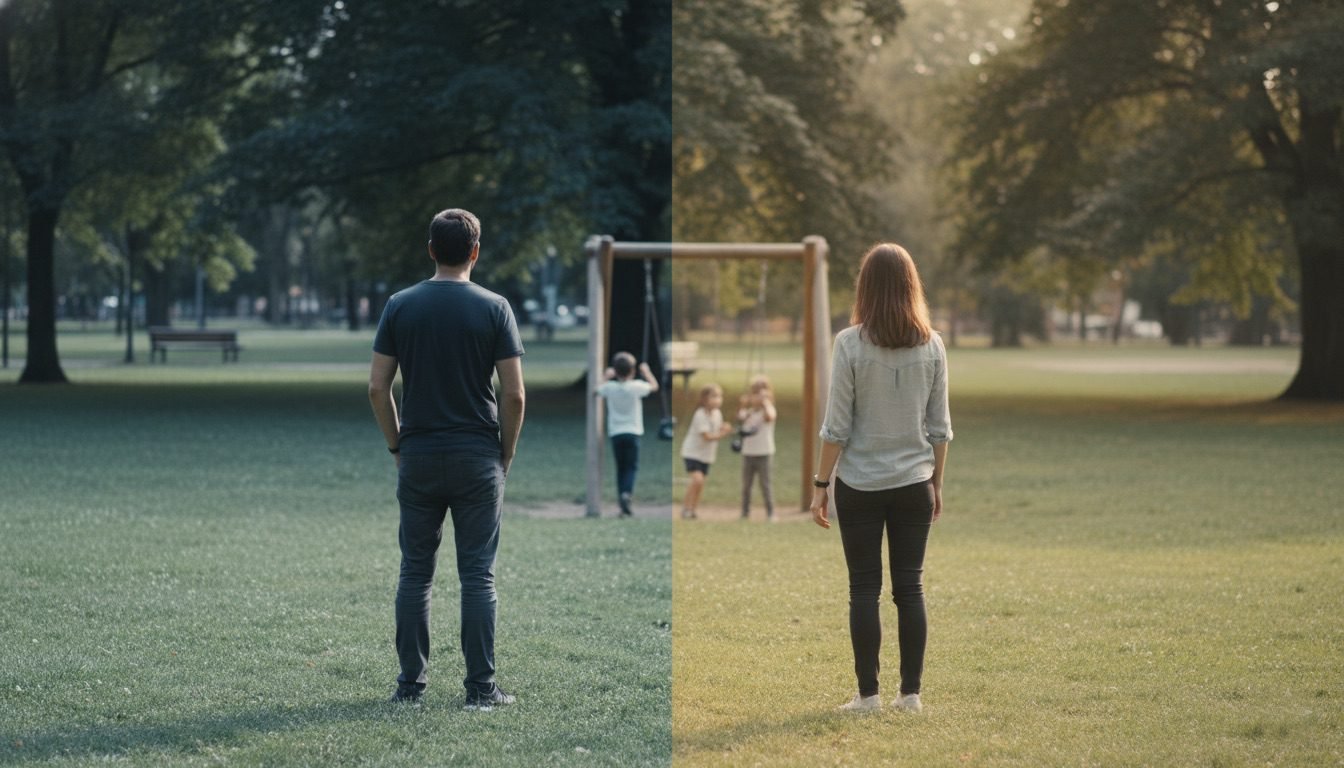
Two parents are standing in the same park, watching children play.
A child climbs up a small structure.
They wobble slightly, then steady themselves.
One parent feels tension rise immediately.
Their body tightens.
Be careful. You’ll fall. This is risky.
They can’t enjoy the moment.
They are already imagining the injury, the tears, the aftermath.
The other parent watches quietly.
They notice the child testing balance, adjusting grip, learning.
Look at that. They’re figuring it out.
There’s a sense of ease, even appreciation.
Same park.
Same child.
Same moment.
But internally, two completely different worlds are being lived.
In one world, the moment is full of danger.
In the other, it’s full of growth.
Nothing different is happening outside.
The difference exists entirely inside.
And this points to something much deeper.
Here’s the strangest thing about being human.
Two people can stand in the same place, look at the same event, and walk away living in completely different worlds.
Same facts.
Same moment.
Same situation.
And yet — one feels safe, the other feels threatened.
One finds meaning, the other finds danger.
This isn’t opinion.
It’s not philosophy.
It’s how the human mind works.
You don’t experience life directly.
You experience life through an internal world your mind is building every second.
You Don’t Live in Reality — You Live in an Interpretation
The world doesn’t come with labels.
Events don’t arrive with built-in meaning.
People don’t come with fixed intentions attached to them.
What actually happens is simple.
What you experience is complex.
Between the event and your experience of it, the mind steps in.
It interprets.
It explains.
It connects the moment to memory.
What you call “reality” is the result of that process.
This is why silence can feel peaceful to one person and terrifying to another.
Why the same criticism can motivate one person and destroy another.
The external world is shared.
The internal world is not.
The Three Powers You’re Using Without Realising It
This is what ancient language was pointing to when it spoke about being “made in the image of God”
Not a physical appearance.
Not a person in the sky.
Not a belief system.
It was pointing to three core human capacities:
The ability to observe.
To be aware that something is happening.
The ability to assign meaning.
To interpret what is happening through thought, memory, and emotion.
The ability to create.
To respond from that meaning — emotionally, behaviorally, relationally — and reinforce an inner world.
This is the conscious state.
With these three abilities, a human being can build an entire internal world — moment by moment.
What you think shapes what you feel.
What you feel shapes what you notice.
What you notice shapes what you believe.
And what you believe quietly becomes the reality you live inside.
This is not manifestation language.
It’s observable cause and effect.
Psychology, neuroscience, and lived experience are all describing the same mechanism — just using different words.
Why Everyone’s Reality Feels True
This is where things get uncomfortable.
Every human being lives inside a reality that feels completely real to them.
A religious parent.
A political activist.
A scientist.
A skeptic.
Each has experienced moments, coincidences, confirmations that reinforce their worldview.
Not because they found “the truth,” but because their reality aligns with their conditioning, or their conditioning shapes their reality.
Family.
Culture.
Education.
Trauma.
Praise.
Rejection.
Most of who you are was shaped before you had a choice.
As Carl Jung pointed out:
Until the unconscious is made conscious, it will direct your life — and you will call it fate.
What feels like destiny is often programming.
When “My Truth” Becomes a Trap
Here’s the part most people miss.
A reality can feel true and still be unhealthy.
Some internal worlds lead to love, service, and stability.
Others lead to fear, addiction, resentment, or collapse.
Feeling true does not mean being life-giving.
This is why cultures clash.
Why religions fight.
Why politics turns feral.
When someone’s reality feels threatened, the nervous system reacts as if survival is at stake.
People don’t defend ideas.
They defend the world they are surviving inside, their beliefs.
Why We Attack Other People’s Realities
If my reality feels true to me, and yours contradicts it, the mind concludes:
If you’re right, I might be wrong.
If I’m wrong, who am I?
This is why disagreement feels personal.
Why questioning beliefs feels violent.
It’s not about facts.
It’s about identity.
Most conflict is not about truth.
It’s about fear of inner collapse – the fear of losing your identity.
The Antidote: Let Reality Be Seen, Not Defended
The solution is not agreement or compromise.
It’s clarity.
You don’t have to validate every belief.
You don’t have to call unhealthy realities healthy.
But you can recognise one simple fact:
Every human is living inside a world shaped by their past, their pain, and their perception.
Respect does not require conversion.
Compassion does not demand surrender.
You can let people live their reality — while consciously shaping your own.
How This Connects to the Back to You Journey
This insight is not the destination.
It’s the starting point.
The 12-step journey exists to help you:
- See the autopilot creating your inner world (Step 1)
- Recognise the stories you live inside (Step 2)
- Pause reactions before they become reality (Step 3)
- Break inherited narratives that no longer serve you
- Undo emotional memory that distorts perception
- Demystify God as consciousness, not belief
Most people live someone else’s script.
Not because they chose it — but because they never saw it.
You Are Not Trapped in Reality — You’re Building It
Your thoughts shape what you feel.
What you feel shapes what you see.
What you see shapes what you believe.
And what you believe quietly becomes the world you walk in.
This isn’t manifestation nonsense.
It’s cause and effect.
The moment you see this clearly, something shifts.
FAQs
How does the mind create reality?
The mind does not create external events, but it plays a decisive role in how those events are experienced. What you perceive as “reality” is shaped by interpretation, memory, emotion, and belief. Two people can face the same situation and experience it completely differently because the mind assigns meaning before awareness intervenes. In this sense, the mind creates the lived reality you move through, even when the external world remains the same.
Is reality subjective or objective?
Reality has both objective and subjective layers. The objective layer consists of shared events and facts. The subjective layer is how those events are interpreted internally. Most human suffering arises not from the objective layer, but from the subjective one. This article focuses on helping you see how the subjective layer is formed, so it no longer controls you unconsciously.
If everyone has their own reality, does that mean all beliefs are equally true?
No. A belief can feel true to someone and still be unhealthy or destructive. Feeling true does not mean being beneficial. Some internal realities lead to clarity, connection, and stability, while others reinforce fear, conflict, or self-harm. Recognizing that someone’s reality feels real to them does not require agreeing with it or validating its consequences.
What role does conditioning play in shaping reality?
Conditioning is one of the primary forces shaping perception. Family, culture, education, trauma, praise, rejection, and social norms install interpretive patterns long before conscious choice is available. These patterns influence what feels threatening, safe, meaningful, or dangerous. Until conditioning is seen clearly, it continues to shape reality automatically and invisibly.
Is this the same as manifestation or law of attraction?
No. This is not about magically attracting outcomes or thinking positively to change the world. It is about understanding cause and effect within the mind. Thoughts influence emotions, emotions influence perception, and perception influences behavior. When this chain runs unconsciously, life feels reactive. When it is seen clearly, responses become conscious. No belief system is required.
How does this understanding reduce conflict with others?
When you see that people are reacting from internally constructed realities, disagreement stops feeling personal. You no longer experience opposing views as direct threats to identity. This creates space for clarity, boundaries, and calm engagement. Understanding how reality is formed does not remove differences, but it prevents unnecessary emotional escalation.
What does it mean to be the “observer” of the mind?
Being the observer means recognizing that thoughts, emotions, and reactions can be noticed without being automatically believed or acted upon. The observer is not a concept or identity; it is the simple capacity to see what is happening internally. This distinction allows awareness to enter before reaction, which is the foundation of clarity explored throughout the Back to You journey.
How does this article connect to the 12-step Back to You journey?
This article provides the conceptual foundation for the 12-step journey. Step 1 helps you see the autopilot creating your internal world. Step 2 reveals the stories shaping perception. Later steps address emotional memory, unconscious reactions, and conditioned belief systems. Together, the steps help you move from living inside an inherited reality to living consciously from awareness.
You stop fearing other people’s realities.
You stop attacking them.
You stop living unconsciously.
You begin writing your life with awareness instead of programming.
And that is where real freedom begins.