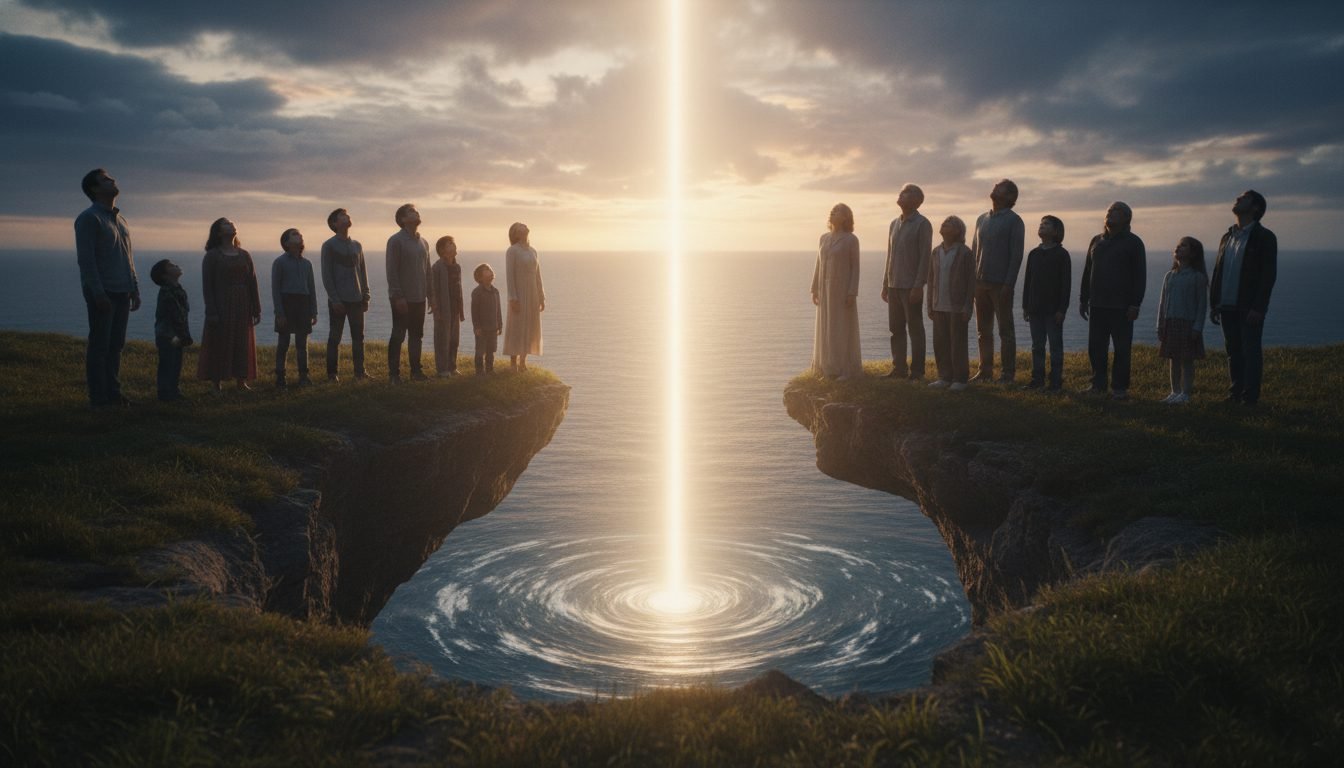

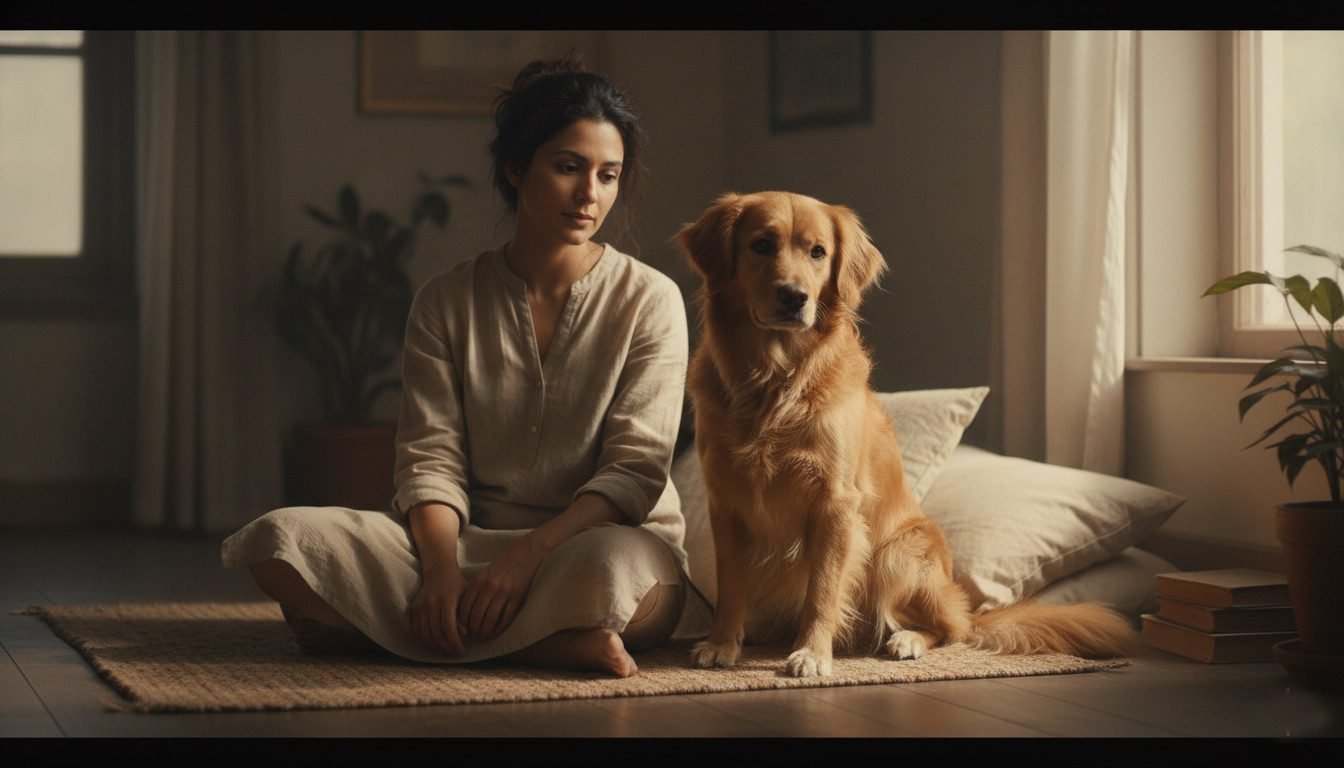
Dog is god spelled backwards.
A quiet look at why this simple joke keeps returning — and what it reveals about presence, love, and the human search
Back to You is not about adding new beliefs.
It is about noticing what has always been right in front of us, quietly shaping how we live.
Sometimes clarity doesn’t come from teachers, books, or practices.
It comes from ordinary encounters we’ve learned to overlook.
Dogs are definitely one of those encounters that we can’t miss.
People often joke that DOG is just GOD spelled backwards.
Most laugh and move on.
A few feel something stir.
For others, it borders on blasphemy.
But sometimes a joke lingers — not because it is clever, but because it accidentally points to something quietly deep and true if you look at it carefully.
Not true in a religious sense.
Not true as something to believe in.
But true in the way certain things feel obvious once you notice them.
What humans search for, describe, argue about, and turn into ideas — dogs seem to live without effort.
So this is not an article about dogs as symbols.
And it is not about God as belief.
It is about presence, unconditional connection, and what the human mind forgets while searching — and how something as ordinary as a dog quietly reveals it.
We usually talk about dogs using the language of ownership.
My dog.
The food I give my dog.
The routine I set for my dog.
But anyone who has actually lived with a dog knows something feels off about that language.
(Note: This kind of understanding doesn’t come from keeping a dog at a distance, but from living alongside one — sharing space, time, and ordinary moments the way you would with family.)
Because what happens between a human and a dog doesn’t behave like ownership at all.
It behaves more like a relationship that doesn’t fit into contracts, rules, or management.
Something quieter.
Something steady.
Something that doesn’t need explanation.
Dogs Don’t Belong to Us the Way We Think
To understand what a dog really is in our lives, we may first need to drop the idea that a dog is a pet.
The word itself performs a subtle reduction.
It classifies, organizes, and implies control.
A dog isn’t an object inside your life.
It’s a different way of being placed right beside your own.
And that difference matters.
Because human beings rarely live where they are.
We live in memory.
We live in anticipation.
We live in stories about who we were and who we should become.
A dog doesn’t.
A dog is here – In the moment.
Two Modes of Living Meet
When you sit next to a dog, something unusual happens.
You are thinking.
Replaying conversations.
Managing yourself.
Measuring whether you’re doing life right.
The dog is responding to what’s happening.
It isn’t wondering:
- Am I enough?
- Where is this relationship going?
- What do I need to protect about this relation?
It isn’t relating to your identity.
It isn’t engaging your history.
It isn’t waiting for reassurance.
It meets what is present.
That’s why the connection feels immediate.
Not emotional.
Not dramatic.
Immediate.
Why Human Love Becomes Heavy
Human love rarely stays simple.
Not because we are broken — but because we remember pain.
So we add conditions without noticing:
- I’ll keep track of who gives more and who pulls away
- I’ll adjust how much we show based on how the other person responds
- I’ll love you if this doesn’t hurt later
These aren’t moral failures.
They’re survival strategies.
And then, right beside us, appears a creature that isn’t playing this game at all.
Dogs Live Without Thinking
A dog loves you because.
It doesn’t calculate loyalty.
It doesn’t wait to see how things turn out.
It doesn’t withdraw affection to teach a lesson.
It simply loves — not as a virtue, not as a belief, but as its natural way of being.
This is what religions struggle to describe when they talk about grace.
Love without prerequisites.
Love without contracts.
Love that doesn’t need to be earned.
Dogs don’t explain this.
They live it.
Why Being With a Dog Feels Calming
People often say dogs are grounding.
It’s not because dogs are doing something special.
It’s because they’re not doing what humans constantly do.
They’re not managing themselves.
They’re not defending an image or identity.
They’re not rehearsing the past or negotiating the future.
When you’re with a dog, your system gets a break.
No role to play.
No performance required.
No explanation needed.
Why Losing a Dog Hurts So Deeply
When a dog dies, the grief often feels heavier than expected.
People feel devastated by it.
But the grief isn’t just about the animal.
You didn’t love your dog through ideas.
You loved through rhythm.
Through routine.
Through touch.
Through shared silence.
When the dog leaves, you don’t lose a story.
You lose a way of being.
A place where you could rest without armour.
That’s what hurts.
Why Dogs Don’t Stay Long
If dogs lived as long as humans, something would be missed.
Love would feel permanent.
Presence would become background.
Gratitude would dull into habit.
Because dogs leave, love stays alive.
Loss doesn’t destroy love.
It reveals how real it was.
Grief isn’t the opposite of love.
It’s love with nowhere to go.
Dogs Don’t Teach — They Interrupt
Dogs don’t try to improve you.
They interrupt:
- Overthinking
- Emotional withdrawal
- Self-importance
- The constant narrative of “me”
They pull you back into the room.
Into the body.
Into the moment.
Not as a practice.
Not as a lesson.
Just by being there.
So is DOG Being GOD Spelled Backwards Just a Coincidence?
Not literally.
And not as something to believe.
But experientially?
Dogs live what humans try to understand.
They don’t explain love.
They don’t justify presence.
They don’t build meaning around being alive.
They arrive.
They stay.
They respond.
They leave.
And in doing so, they quietly ask a question humans often avoid:
Can you live like this too — without armour, without calculation, without needing guarantees?
If the answer is even briefly yes,
then the dog has already done what it came to do.
No belief required.
No doctrine needed.
Just a reminder — you too can.
FAQs
Is this article saying dogs are God?
No. The DOG–GOD reversal is mentioned only as a pointer, not a belief. The article focuses on observable presence, not divinity.
Why does Back to You talk about dogs?
Because everyday experiences often reveal how the mind works more clearly than abstract ideas. Dogs naturally live in presence, which makes them a grounded example.
Why does being with a dog feel calming?
Dogs are not managing identity, memory, or expectation. Sitting with that state allows the human nervous system to relax.
Why does losing a dog hurt so deeply?
The grief is not only about the animal. It is about losing a space of unconditional presence where you didn’t need to explain or defend yourself.
What is this article inviting the reader to notice?
Not dogs themselves, but the state of presence that becomes visible through them — and whether that state is possible, even briefly, in human life.