

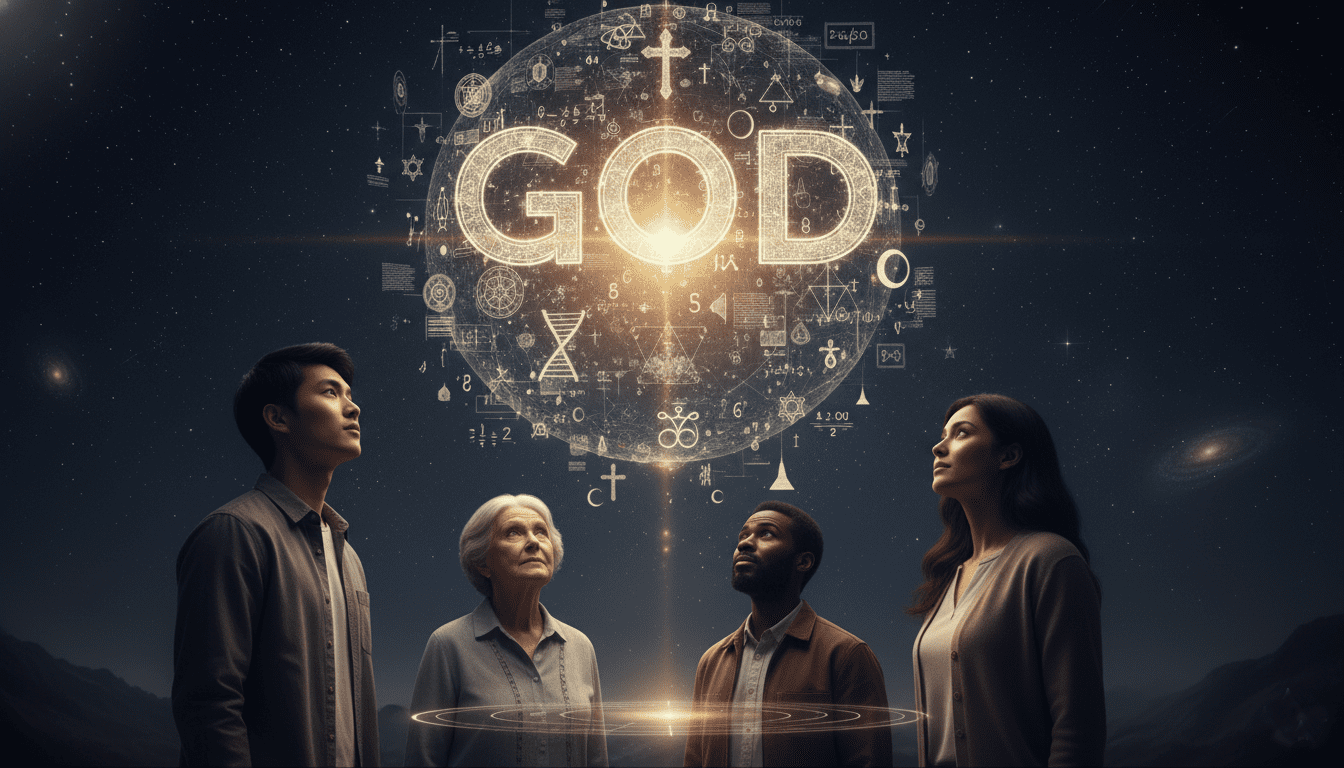
Demystifying God does not mean denying anything. It means removing what was added before you ever had a chance to see it clearly.
Why This Step Comes So Late in the Journey
Clarity around God cannot happen early.
Not because God is complex, but because the mind is.
If this step appeared earlier, it would immediately turn into belief, rejection, argument, or identity. The mind would rush to take a position. Either for or against. Either devotion or dismissal.
None of that is clarity.
This step appears only after the mind has lost much of its unconscious authority.
Only after you have
Seen through illusion,
Understood how the mind creates meaning,
Learned to pause reactions,
Broken personal stories,
Returned to the present moment,
Stopped fixing life to feel okay,
Undone emotional memory,
Stabilised presence,
and Learned to respond consciously
does this topic begin to settle.
If you have not moved through these steps yet, it is better to pause here.
Otherwise, this section can easily be misunderstood as something that pulls you away from your God, rather than helping you see without distortion.
Only then does the mind lose enough power for this question to be approached honestly.
This step is not about God.
It is about seeing what the idea of God has been doing to the mind.
This step questions not God, but what belief about God has done to the mind.
This is the longest article in the twelve-step journey.
Not because God is difficult to understand, but because more has been layered onto this topic than any other.
Belief, fear, authority, identity, culture, reward, punishment, and inherited ideas are all tangled here.
Untangling them cannot be rushed.
This length is deliberate. It reflects the care required to remove distortion without replacing it with another belief.
The Last Authority the Mind Holds Onto
Throughout this journey, different layers of unconscious authority have been dismantled.
First psychological authority.
Then emotional authority.
Then behavioural authority.
Step 11 addresses the last and strongest authority the mind clings to for the majority.
The idea of God as an external power.
As long as this authority remains unquestioned, the mind always has a place to surrender fear, responsibility, and uncertainty.
An unseen watcher.
An ultimate judge.
A final decision-maker.
This authority feels comforting.
But comfort is not clarity.
Comfort often keeps us holding onto ideas we no longer need.
How God Became an Idea Before It Became an Experience
No one is born believing in God.
A child is born alert, curious, sensitive, and open.
The idea of God enters later — through language.
Through family conditioning.
Through religious instruction.
Through cultural systems of fear and reward.
Before a child ever asks, “What is God?”, they are told:
“God is watching.”
“God will punish.”
“God will reward.”
“God approves.”
“God disapproves.”
This shapes behaviour, not understanding.
God becomes a concept tied to fear, obedience, hope, and guilt.
And once a concept forms, the mind protects it.
Not because it is true.
But because it feels safe.
The Map of Home
A child is born in a house.
They know the warmth. The sounds. The feeling of being there.
No words needed. Just direct experience.
Then someone draws them a map of the house.
Labels every room. Marks every door. Adds measurements.
Over time, the child studies the map.
Memorizes it. Carries it everywhere.
Years pass.
Now when someone asks, “What is your home?”
They describe the map.
Not the actual feeling of being there.
Not the warmth. Not the sounds.
Just the lines on paper.
The map replaced the experience.
God works the same way.
You were born into existence.
Direct. Immediate. No explanation needed.
Then someone handed you a map.
Told you what to believe. What to fear. What to worship.
Now you carry the map.
And mistake it for the actual place.
Fear Is the Real Issue — Not God
Most people think they believe in God.
What they actually carry is fear.
Fear of being wrong.
Fear of punishment.
Fear of losing control.
Fear of meaninglessness.
Fear needs authority.
Fear of hell & heaven
So the mind creates an all-seeing figure.
Someone who judges.
Someone who records.
Someone who decides your worth.
This creates obedience.
But obedience has nothing to do with truth.
Truth does not threaten.
Truth does not punish.
Truth does not demand belief.
Fear looks for something to obey. Truth does not require obedience.
The Imagined Guard
A child is told: “Don’t go near that door. There’s a monster behind it.”
The child never goes near the door.
Years pass.
They still avoid it.
Not because they’ve seen a monster.
But because fear was planted early.
One day, the door opens by accident.
Nothing there.
Just an empty room.
The monster was never real.
But the fear was.
And the fear shaped behavior for years.
Most people carry an imagined guard.
Watching. Judging. Recording.
Not because they’ve seen it.
But because fear needs something to project onto.
The guard keeps you obedient.
But obedience built on fear isn’t truth.
It’s just fear with a name.
Belief Is Borrowed. Clarity Is Direct
Belief is always inherited.
Someone else experienced something.
Someone else interpreted it.
Someone else named it.
You were asked to accept it (without questioning).
Clarity works differently.
It does not ask you to accept or reject.
It asks you to look.
Anything real does not require belief.
You do not believe in breathing.
You do not believe in awareness.
You do not believe in existence.
You experience them directly.
When belief is required, direct seeing or experience is usually missing.
What Actually Remains When Belief Drops
This is where many people hesitate.
The mind says, “If I let go of belief, I will lose meaning.”
But watch what actually happens.
When belief drops, fear softens.
Resistance reduces.
Life feels closer, not distant.
There is no figure watching.
But there is intelligence.
There is order without command.
There is awareness without personality.
This is not something you worship.
This is something you live inside.
When belief falls away, life feels closer, not emptier.
The Crutch
You injure your leg.
Someone gives you a crutch.
It helps. You lean on it. You walk.
Time passes.
The leg heals.
But you still carry the crutch.
Not because you need it.
But because it feels safer.
“What if I fall without it?”
One day, you set it down.
Just for a moment.
You walk.
The leg holds.
You were healed long before you dropped the crutch.
Belief is the crutch.
It helped when fear was strong.
When meaning felt uncertain.
But at some point, it stops being support.
It becomes weight.
Drop it, and you don’t collapse.
You discover you’ve been walking on your own the whole time.
Why God Cannot Be Found Through Thought
Thought always divides.
It creates a thinker and something thought about.
Whatever is real cannot be placed opposite you.
The moment God becomes an object, it is already false.
The moment God is described, it is already limited.
This is why searching for God through thinking never ends.
And why silence reveals more than prayer.
Not forced silence.
The silence that appears when seeking outside stops.
Then What Is God?
This question usually appears when belief starts to loosen.
The mind wants clarity, but it asks in the only way it knows how.
By demanding a definition.
But notice something simple.
Whatever idea you have about God is shaped by what you already know.
People imagine God as powerful because power matters to them.
As loving because love feels meaningful.
As judging because judgement already exists in the human mind.
In most cases, God becomes an exaggerated version of the self.
More powerful.
More knowing.
More controlling.
This is not a revelation.
It is a projection.
The mind takes familiar human qualities and stretches them into something divine.
Once this happens, God becomes an idea.
Something to believe in.
Something to argue about.
Something to fear or depend on.
This is why both belief and disbelief lead nowhere.
Both sides are taking positions about something they have not directly experienced.
Belief does not bring clarity.
Disbelief does not either.
Both keep the mind occupied.
Whatever is real does not require belief.
You do not believe in breathing.
You do not believe in awareness.
You do not believe in existence.
You experience them directly.
In the same way, what people call God is not something to be imagined, described, or argued over.
It is not a figure watching from somewhere.
Not a personality.
Not a judge deciding outcomes.
It is what remains when the need for comfort, certainty, and explanation drops.
When the mind stops turning the unknown into an idea.
When fear no longer needs authority.
At that point, the question “What is God?” no longer needs an answer.
It dissolves.
And what remains is more honest than any definition the mind can create.
This Is Not Atheism, and Not Religion
This step is often misunderstood.
Demystifying God does not mean denying God.
It means removing distortion.
You are not asked to replace belief with disbelief.
You are asked to see how belief itself blocks seeing the real.
When conditioning falls away, what remains is not a position.
It is intimacy with life.
No intermediaries.
No fear.
No reward system.
Clarity appears when life is seen directly, without belief or resistance.
How This Shows Up in Real Life
Watch how belief operates daily.
Someone prays but remains anxious.
Someone believes but reacts with fear.
Someone worships but cannot trust life.
Someone speaks of oneness but cannot accept people who think differently.
Someone follows rituals carefully but cannot maintain inner peace.
Someone talks about compassion yet lives from judgement.
Someone claims faith, but every disagreement disturbs their peace.
Someone says all are God’s creation, yet cannot see creation as one.
Belief did not bring clarity.
Now observe someone who has dropped the idea entirely.
They may not speak about God at all.
But their actions are less driven by fear.
They respond without panic.
They allow uncertainty without collapsing into resistance.
Nothing needs to be declared.
Clarity expresses itself quietly, through how life is met.
Practical Exercise: Let the Question Collapse
Do this once.
Sit quietly.
Notice the question, “Is there a God?”
Do not answer it.
Do not fight it.
Let the question dissolve.
Notice what remains when the question is gone.
That space is more honest than any belief.
Related Clarity
- Why Division Creates Inner Conflict
- Presence Is the Only Real Stability
- Responding Instead of Reacting
Take-Home Clarity: What This Article Really Points To
If this article could leave you with a few simple reminders, let them be these:
- Demystifying God is not denial; it is removing inherited ideas that block direct seeing.
- Most belief is learned through fear, culture, and conditioning rather than direct experience.
- Fear often hides behind religious authority and shapes obedience.
- Belief and disbelief are both mental positions; clarity lies beyond both.
- What is real does not need belief — it is directly experienced.
- When fear and borrowed ideas soften, life feels closer and less divided.
- This step is not about rejecting faith but about seeing without distortion.
- When the need for certainty drops, life is met directly without intermediaries.
Truth does not demand belief.
It becomes visible when fear and borrowed ideas fall away.
And in that clarity, life is no longer filtered through authority or fear.
FAQs
Is this against religion?
No. It is about clarity, not opposition.
Does this mean God does not exist?
Existence is not the point. Direct experience is.
Why does belief feel so strong?
Because fear and repetition reinforce it.
Can I still pray?
Prayer changes when fear is removed.
What replaces belief?
Nothing. Seeing needs no replacement.
Why does this feel unsettling?
Because the mind is losing authority.
Is this dangerous?
Only to false certainty.
What changes after this step?
Seeking ends. Living begins.