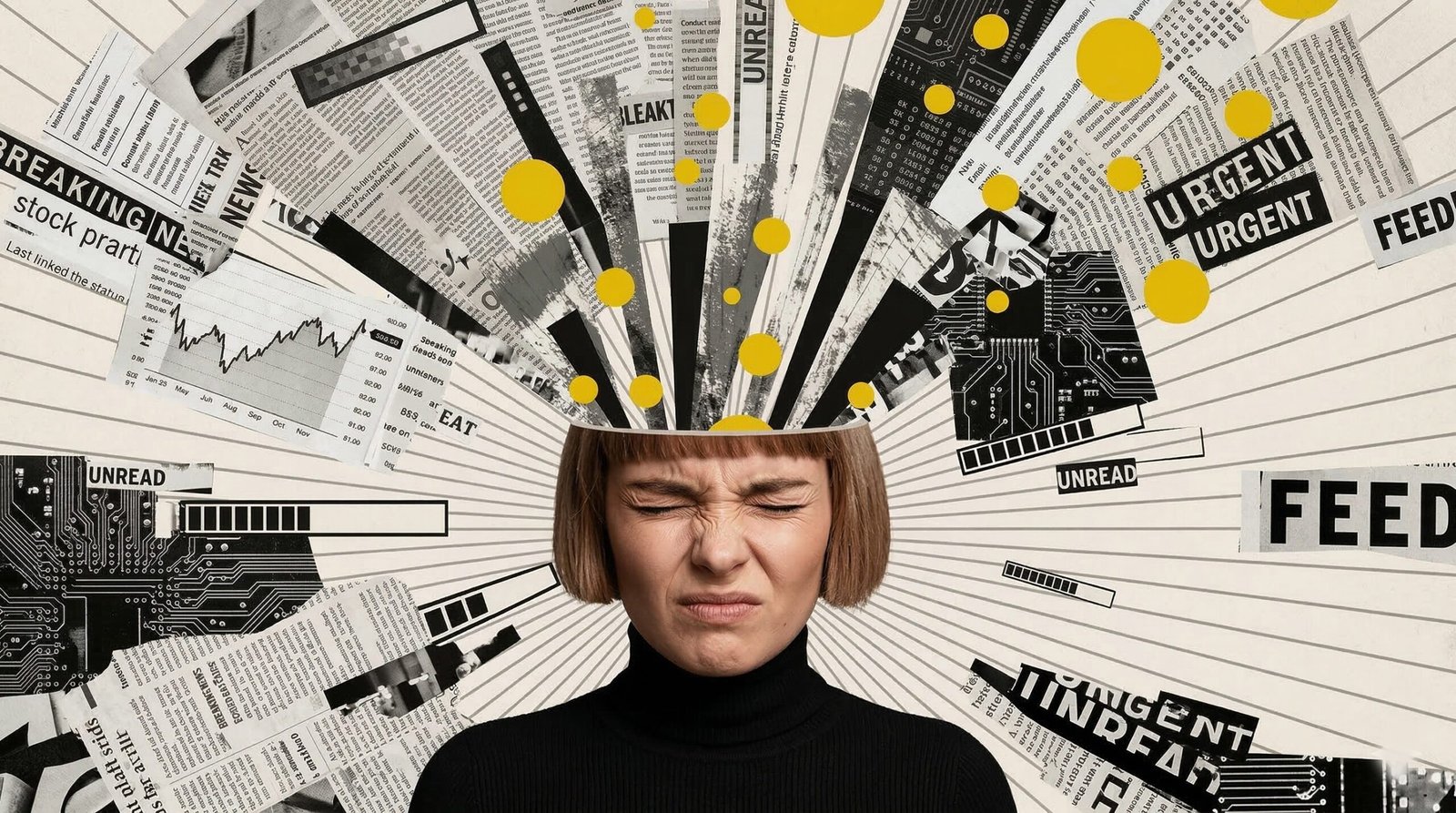


Why do we mistake our interpretation for reality? Discover how naive realism shapes our thinking, influences our relationships, and how awareness helps us see beyond our conditioning.
Everyone thinks they see things as they really are.
When someone disagrees, we often assume they are the ones who don’t understand.
But what if we are confusing what we see with what our minds tell us it means?
Why Does Everyone Think They Are Right?
George Carlin used to have this joke:
“Have you ever noticed how when you’re driving on the highway, anyone going faster than you is a maniac, and anyone going slower than you is an idiot?“
It’s funny because most of us recognise ourselves in it.
The driver going faster seems reckless.
The driver going slower seems incompetent.
And our own speed feels perfectly reasonable.
But in reality, whether someone is driving how they drive depends on much more than speed. Speed limits, road conditions, the driver’s age and state of mind, distractions, the condition of the vehicle, and even the circumstances of the journey can matter. One driver might be breaking the law. Another might be responding to a hazard. Someone else might simply be unaware of the conditions around them.
We cannot understand the entire situation by comparing their speed with ours.
Yet our minds make similar judgements without even a thought, every day.
We take our own perspective as the reference point and evaluate everyone else against it.
We rarely begin by asking what we might not know. We begin by deciding what is wrong with the other person.
The problem is not that we make judgements. It is that we often mistake our judgements for objective reality.
This tendency has a name in social psychology: naive realism.
But understanding the concept is only the beginning. The deeper question is why we trust our own interpretation so easily that we rarely think to examine it.
1. Naive Realism: The World Looks the Way You See It
Naive realism describes our tendency to believe that we perceive the world objectively, that reasonable people should generally reach similar conclusions, and that those who disagree with us must be missing something.
Think about the last time you had an argument with someone.
You probably had reasons for your position. You remembered what happened, considered the information available to you, and arrived at a conclusion that made sense.
Then the other person disagreed.
Perhaps you thought they had misunderstood the situation. Perhaps you felt they were being unreasonable. Perhaps you wondered how they could fail to see something so obvious.
What you may not have considered was that your own conclusion could also be influenced by incomplete information, assumptions, or personal experiences.
Psychologists Emily Pronin, Thomas Gilovich, and Lee Ross explored this difference in their research paper, Objectivity in the Eye of the Beholder. Their work examines why people tend to see others as more susceptible to bias than themselves.
Of course, people can be wrong. Some conclusions are better supported by evidence than others. Recognising naive realism does not mean that every opinion is equally valid.
It means recognising that our confidence in a conclusion does not establish its accuracy.
We can be sincere and still be mistaken.
We can think carefully and still overlook something important.
We can recognise another person’s bias while remaining unaware of our own.
The mind rarely announces when it is making an assumption. It simply presents the conclusion as something that makes sense.
That is why we need more than the ability to think. We need to notice how our thinking works.
2. You See What Happened, but Do You See What It Means?
Imagine that you send a message to a friend.
They read it but do not reply.
What do you know?
You know that the message was read and that no reply has arrived.
But your mind may quickly add a meaning.
Perhaps your friend is upset with you.
Perhaps they are deliberately ignoring you.
Perhaps they no longer value your friendship.
Before you know it, you may feel hurt or angry. You might withdraw from the person or decide not to contact them again.
Yet you have not established why they did not reply.
They might be busy, distracted, exhausted, or unsure how to respond. They might also be avoiding the conversation. You need more information to know which explanation is correct.
Notice what happened.
There was an event. Your mind interpreted it. Then you began responding to the interpretation as though it were an established fact.
This process happens so quickly that we often fail to notice the difference.
We do not consciously say, “My friend has not replied, and I am now interpreting that silence as rejection.”
We simply feel rejected.
The feeling is real. But the conclusion behind it may not be accurate.
This is the starting point of Step 1: See Through the Illusion. We begin by examining what we accept as reality, including the assumptions we rarely question.
The same process happens when we interpret a colleague’s silence as disrespect, a parent’s concern as control, or a child’s disagreement as disobedience.
The mind connects an event to a familiar explanation. That explanation influences our feelings, and those feelings influence what we do next.
We may spend years responding to these interpretations without recognising that they are interpretations.
Seeing clearly begins with noticing the difference between what happened and what we think it means.
3. Your Mind Does Not See Everything You Think It Sees
We tend to believe that we first observe a situation and then decide what it means.
In reality, our existing beliefs and expectations often influence what we notice from the beginning.
Suppose you believe a colleague is unreliable.
They arrive late for a meeting. You notice it immediately.
Later, they forget to send a document. You remember that too.
When they complete a difficult task successfully, you may acknowledge it but give it less importance.
Your original belief remains intact.
You now feel that you have more evidence that the colleague is unreliable.
Perhaps you do. Repeated missed deadlines can be a legitimate reason for concern. But you also need to consider whether you are noticing the full pattern or mainly the events that support your existing judgement.
This is related to confirmation bias, the tendency to favour information that supports existing beliefs while overlooking or discounting contradictory evidence.
The American Psychological Association’s definition of confirmation bias explains how people may emphasise supporting evidence while dismissing or failing to seek information that challenges their expectations.
Once we believe something, we may become less attentive to information that contradicts it.
What we notice then appears to confirm the belief.
The belief becomes stronger, and the next situation is interpreted through the same expectation.
This can happen without deliberate dishonesty. We may sincerely believe we are simply remembering what happened.
We may not realise how selectively we have been paying attention.
As explored in Step 2: See the Mind Clearly, understanding the mind means recognising that its conclusions deserve examination before we treat them as unquestionable.
We do not need to eliminate interpretation. We need interpretation to make sense of life.
We need to recognise when our minds are selecting information, filling gaps, or reinforcing a belief without considering the full picture.
The question is not simply whether you have reasons for your belief. It is whether you are willing to examine the reasons that challenge it.
4. Why Other People Seem Wrong
Imagine two colleagues discussing the same meeting.
One believes their manager asked reasonable questions about a decision.
The other feels the manager was questioning their competence.
Both attended the meeting. Both heard the same words. Yet they came away with different interpretations.
Why?
People do not approach situations with identical experiences, expectations, memories, or concerns.
One colleague may have worked with managers who encouraged open discussion. The other may have experienced repeated criticism in the past and become more sensitive to it.
The words are the same, but the meaning attached to them differs.
This does not mean both interpretations are necessarily correct.
Perhaps the manager was simply asking for clarification. Perhaps the manager was being unnecessarily critical. The tone, circumstances, and wider history may help establish what happened.
The important point is that we should not assume we understand the entire situation just because our own interpretation feels obvious.
We experience our own thoughts and feelings directly. We cannot simply look at another person and know exactly what they are thinking.
We have to ask, listen, and examine the available evidence.
Yet when someone disagrees with us, we often do the opposite.
We explain why our view makes sense and search for reasons the other person must be mistaken.
We rarely begin by considering that we might be missing something ourselves.
Think about how often this happens in relationships.
One person believes they are being helpful. The other feels controlled.
One believes they are being honest. The other feels hurt.
One believes they are setting a reasonable boundary. The other feels rejected.
Understanding another person’s experience does not require us to agree with their interpretation. It requires us to recognise that our own interpretation is not the only one available.
Sometimes the other person is mistaken. Sometimes we are. Sometimes both of us have incomplete information.
We cannot determine which is true simply by asking whose position feels more reasonable from the inside.
Before deciding that someone else cannot see clearly, consider whether you have examined what you might not be seeing.
5. When You Defend Your View, What Are You Really Protecting?
Some disagreements are surprisingly difficult to let go of.
We repeat our arguments, search for evidence, and prepare responses long after the conversation has ended.
Sometimes, the issue is no longer just about the subject being discussed.
It has become connected to how we see ourselves.
Consider a parent who believes that strict control is necessary for a child’s success.
The parent may genuinely care about the child’s future. They may believe their rules protect the child from mistakes.
When the child asks for more independence, the parent may interpret the request as disrespect or immaturity.
The parent might not initially consider whether the rules are too restrictive, whether the child needs a different kind of support, or whether the parent’s own fears are influencing the decision.
Why can that possibility be difficult to consider?
Because the disagreement may challenge more than a particular rule. It may challenge the parent’s understanding of what a good parent is supposed to be.
Questioning the rule can begin to feel like questioning the parent’s identity.
The parent may then defend the rule without fully examining whether it is helping the child.
This happens in many areas of life.
Someone who sees themselves as intelligent may struggle to admit a mistake.
Someone who believes they are always fair may find it difficult to recognise when they have treated another person unfairly.
Someone who values independence may interpret asking for help as weakness.
We may believe we are defending the truth when we are also defending our image of ourselves.
There is no need to blame ourselves for this. The important thing is to notice it.
When a belief feels impossible to question, we can ask why.
Are we examining the evidence, or are we trying to avoid the discomfort of being wrong?
Can we revise a decision without treating that revision as a personal failure?
Can we admit that we misunderstood something without concluding that we are unintelligent or incapable?
A belief is something we hold. It does not have to become something we must defend at all costs.
When we recognise this difference, disagreement becomes less of a battle over who we are and more of an opportunity to understand what is actually happening.
6. The Past Can Influence What You See Today
Our interpretations do not come from the present situation alone.
They are influenced by what we have learned to expect.
A person who has repeatedly experienced criticism may become sensitive to disapproval.
Someone who has been compared with others may automatically measure their own worth against another person’s success.
A person who has experienced rejection may become alert to signs that someone is losing interest.
These responses may have developed over many years. Because they are familiar, they can feel like natural and accurate ways of seeing the world.
But familiar does not necessarily mean accurate.
Imagine your manager sends you a message: “Can we discuss your work tomorrow?”
The message provides very little information.
Yet your mind may immediately begin preparing for criticism. You replay recent mistakes and imagine the worst possible outcome.
Another employee receiving the same message might assume that the manager wants to discuss a new project.
The words are identical. The expectations are different.
Your reaction may have more to do with what you have learned to anticipate than with what the manager actually intends.
Of course, the manager might have a concern. There may be reasons to prepare for the conversation. But until you know more, the imagined outcome remains an interpretation.
This is how the past can enter the present without our noticing.
We encounter a new situation, but our minds respond partly through an old expectation.
That expectation influences what we notice. What we notice reinforces the expectation. And the familiar response begins again.
Past experience can provide useful information. If someone has repeatedly broken a promise, it is reasonable to take that history into account.
The problem is allowing the past to decide every new situation automatically.
A previous disappointment does not prove that everyone will disappoint us.
A past failure does not establish that we will fail again.
A previous criticism does not mean that every question is an attack.
Awareness helps us distinguish what is happening now from what our minds have learned to expect.
We do not need to erase the past. We need to recognise when it is influencing our present judgement.
7. Awareness Does Not Mean Everyone Is Right
Recognising the limits of our perspective does not mean that all opinions are equally valid.
It does not mean that we should stop making judgements or treat facts as matters of personal preference.
If a driver exceeds the speed limit, drives while distracted, or ignores a clear safety hazard, there may be objective evidence that the behaviour is dangerous.
If a claim is contradicted by reliable evidence, we do not have to treat it as equally credible simply because someone believes it sincerely.
Awareness is not the absence of judgement.
It is the ability to recognise the difference between evidence, interpretation, and assumption.
Consider three questions:
- What do I know? Identify the facts supported by the available evidence.
- What am I interpreting? Notice the meaning you have attached to those facts.
- What might I be missing? Consider whether important information is unavailable or whether another explanation deserves examination.
These questions do not require you to abandon your conclusion.
They help you understand why you reached it and whether it stands up to examination.
Suppose two colleagues disagree about whether a deadline is realistic.
One believes the deadline is reasonable. The other believes it is impossible to meet.
Instead of deciding that one person is incompetent or unreasonable, they can examine the workload, available resources, dependencies, and actual constraints.
The evidence may support one position more strongly. It may also reveal that both people are working with incomplete information.
Either way, examining the facts is more useful than treating the first reaction as the final answer.
We can remain firm when the evidence supports us.
We can remain open when it does not.
We can disagree without assuming that the other person is unintelligent, dishonest, or incapable of understanding.
The goal is not to stop deciding what is true. It is to stop assuming that our first conclusion must be true simply because it feels right.
8. Awareness Begins When You Notice Your Own Mind
Understanding naive realism is useful.
Knowing the concept can help us recognise a common psychological pattern.
But knowing about a pattern is not the same as seeing it operate within ourselves.
You can understand confirmation bias and still ignore evidence that challenges your beliefs.
You can recognise that people have different perspectives and still assume your own is the most reasonable.
You can explain how conditioning works and still react automatically when someone questions an opinion you hold strongly.
The real question is whether you notice these processes when they are happening.
Imagine that someone disagrees with you during a conversation.
You feel irritation rising.
Your mind begins preparing an argument.
You notice the other person’s mistakes and remember examples that support your position.
You become increasingly certain that you are right.
Normally, the process may continue without examination.
You respond sharply. The other person becomes defensive. They begin explaining why you are wrong.
Now both of you are defending your positions, and neither is paying much attention to what is happening within yourselves.
But suppose you notice the reaction before responding.
You recognise the irritation.
You notice the urge to prove your point.
You see that your mind has already started building a case against the other person.
You do not have to suppress the reaction or pretend that you agree.
You simply recognise what is happening.
That recognition creates an opportunity to respond differently.
You might ask a question, request clarification, or explain your reasoning without attacking the other person’s intelligence.
You might discover that you misunderstood something.
Or you might conclude that the evidence still supports your original position.
The outcome can vary. What changes is your relationship with the automatic process.
Instead of being carried along by every reaction, you become aware of it.
This connects with Step 3: How to Pause the Mind’s Automatic Reactions. A pause gives us an opportunity to notice what the mind is doing before allowing its first reaction to determine our behaviour.
You may discover that you are protecting your pride, avoiding uncertainty, or assuming another person’s intentions without enough information.
These observations are not reasons to condemn yourself.
They are opportunities to understand yourself more clearly.
The moment you notice your interpretation as an interpretation, you no longer have to accept it without examination.
That is where awareness becomes practical.
9. You Do Not Have to Believe Every Conclusion Your Mind Produces
The mind is constantly trying to make sense of what is happening.
It connects information, draws conclusions, and uses memories and expectations to anticipate what might happen next.
These processes are useful. We would struggle to function if we had to consciously analyse every detail of every situation.
The problem is not that the mind interprets.
The problem is that we may not recognise when an interpretation has taken place.
We may experience a thought as a fact simply because it appears quickly and feels convincing.
We may experience a feeling as proof that our interpretation is correct.
We may experience a familiar belief as an unquestionable truth because we have held it for years.
But a thought can be examined.
A feeling can be acknowledged without treating it as proof.
A belief can be reconsidered without rejecting everything we know.
Imagine thinking that someone is being deliberately disrespectful.
You can notice that thought without immediately accepting it as the truth.
You can examine what happened, what evidence supports your conclusion, and what information is missing.
You can acknowledge your irritation without allowing it to dictate your response.
You may still decide that the person behaved disrespectfully. The difference is that you have examined the conclusion rather than automatically obeying it.
This is the distinction between trying to control every thought and learning to see the mind clearly.
One can become another task to perform.
The other begins with observation.
You do not need to make your mind infallible.
You need to recognise that it can be mistaken.
Clarity does not come from adding another belief about how you should think. It begins when you notice what your thinking is already doing.
10. What Changes When You Stop Treating Your Perspective as the Whole Truth?
You do not have to stop having opinions.
You can still make decisions, set boundaries, disagree with people, and stand by conclusions supported by evidence.
What changes is the assumption that your perspective must be complete simply because it is yours.
When you recognise this, you become more willing to ask questions before reaching conclusions.
You become more attentive to information that challenges your beliefs.
You become less likely to confuse another person’s disagreement with a personal attack.
You may also begin noticing how much unnecessary conflict comes from assumptions about what other people mean.
Someone speaks briefly, and you assume they are angry.
Someone challenges your decision, and you assume they do not respect you.
Someone chooses differently, and you assume they have made a mistake.
These interpretations may sometimes be correct. But when you treat them as facts without examination, you can react to situations that do not exist in the way you imagine them.
An assumption can change the tone of a conversation.
That tone can trigger a defensive response.
The defensive response can then appear to confirm the original assumption.
Before long, two people may be reacting to each other’s interpretations rather than understanding the situation that started the disagreement.
Awareness gives us an opportunity to interrupt this process.
We can ask instead of assume.
We can listen instead of preparing our next argument.
We can examine evidence instead of searching only for confirmation.
We can recognise when the mind is defending a familiar position rather than investigating what is true.
This is the deeper purpose of unlearning.
We are not trying to replace every old belief with a new one. We are learning to recognise how beliefs, expectations, memories, and interpretations influence our experience.
We begin to see the difference between what happens and the story we build around it.
We begin to understand why our own perspective feels so convincing.
And we become more capable of examining it without immediately defending it.
The world does not become simpler just because we recognise these patterns. People will still disagree. Some decisions will remain difficult. Some interpretations will be wrong, and some will be well supported.
But we no longer need to assume that our first understanding is the final one.
We can investigate.
We can listen.
We can revise.
We can act based on what the evidence supports.
Clarity begins when we stop confusing our interpretation of reality with reality itself.
Practical Exercise: Fact, Interpretation, or Assumption?
The next time you feel certain that someone is wrong, unfair, disrespectful, or unreasonable, pause briefly.
Choose one specific situation. Do not try to analyse your entire life. Simply examine what happened.
1. Identify the fact.
What happened that could be described without guessing what another person intended?
2. Identify your interpretation.
What did you decide the event meant? Did you assume someone was trying to disrespect you, reject you, control you, or prove something about you?
3. Identify what you do not know.
What information is missing? What would you need to establish before treating your interpretation as fact?
4. Examine the evidence.
Does the available evidence support your conclusion? Is there another explanation worth considering?
You do not have to find a positive explanation.
You do not have to agree with the other person.
You do not have to change your conclusion simply because another explanation is possible.
The purpose is to see the difference between what you know and what you have assumed.
Do not try to become a person who is always right. Learn to notice when your mind assumes that it already is.
Key Takeaways
- Naive realism is the tendency to believe that our own perception is objective and that people who disagree with us must be mistaken or biased.
- Observation and interpretation are different. We may know what happened without knowing exactly what it means.
- Conditioning influences perception. Past experiences, expectations, and beliefs affect what we notice and how we interpret it.
- Confirmation bias can strengthen existing beliefs. We may pay more attention to evidence that supports what we already think.
- Certainty is not proof. Feeling convinced does not establish that a conclusion is accurate.
- Awareness does not mean abandoning judgement. It means examining our conclusions against evidence and remaining willing to revise them.
- Unlearning begins with observation. When we recognise the mind’s interpretations, we can examine them instead of automatically reacting to them.
Frequently Asked Questions
1. What is naive realism in psychology?
Naive realism is the tendency to believe that we see the world objectively and that reasonable people should generally reach conclusions similar to ours. When others disagree, we may assume they lack information, reason poorly, or are influenced by bias. The concept helps explain why people can disagree strongly while each sincerely believes they are seeing the situation clearly.
2. Why does everyone think they are right?
People understand situations through their own experiences, beliefs, expectations, and available information. Their conclusions can therefore feel obvious and reasonable from their own perspective. Naive realism makes it difficult to recognise that another person may be working with different information or interpreting the same facts differently.
3. Is naive realism the same as confirmation bias?
No. Naive realism involves believing that our own perspective reflects reality objectively. Confirmation bias involves favouring information that supports existing beliefs while overlooking or discounting contradictory evidence. The two can reinforce each other, making it harder to reconsider our conclusions.
4. Does naive realism mean that reality is subjective?
No. Naive realism does not mean that facts do not exist or that every interpretation is equally accurate. It highlights the difference between what happens and how we understand what happens. Evidence, reliable information, and careful examination help us distinguish better-supported conclusions from assumptions.
5. How does conditioning affect the way we see reality?
Past experiences, learned beliefs, expectations, and emotional memories can influence what we notice and how we interpret it. For example, someone who expects rejection may interpret an unanswered message as a sign of dislike. Recognising this influence helps us examine our conclusions rather than automatically treating them as facts.
6. Can naive realism damage relationships?
Yes. When we assume that our interpretation is the only reasonable one, we may dismiss another person’s experience, assign intentions without asking, or turn a disagreement into a personal conflict. Recognising the limits of our perspective makes room for questions, listening, and a more accurate understanding of what happened.
7. Does awareness mean I should stop judging people?
No. Judgement is sometimes necessary, particularly when evaluating safety, behaviour, evidence, and decisions. Awareness means recognising what supports your judgement and what remains an assumption. It allows you to make decisions without automatically treating every thought or reaction as unquestionable truth.
8. How can I become less influenced by naive realism?
Start by separating observable facts from your interpretation of them. When someone disagrees with you, examine the evidence, ask questions, and consider whether important information is missing. You do not have to abandon your conclusion. You need to remain willing to examine it and revise it when the evidence calls for a change.
9. What is the difference between perception and reality?
Reality refers to what exists or happens, while perception is how we experience and interpret it. Our perception can be influenced by attention, expectations, memories, and assumptions. Recognising these influences helps us distinguish what we have observed from the meaning we have attached to it.
10. How does awareness help us overcome naive realism?
Awareness helps us notice when we are treating our interpretation as an unquestionable fact. By examining our assumptions, looking at the available evidence, and remaining open to new information, we can make more conscious decisions instead of automatically defending our first conclusion.
Continue Your Journey with Back to You
Explore these steps to understand how the mind shapes your experience and how awareness can help you see more clearly.
- Step 1: See Through the Illusion
- Step 2: See the Mind Clearly
- Step 3: How to Pause the Mind’s Automatic Reactions