

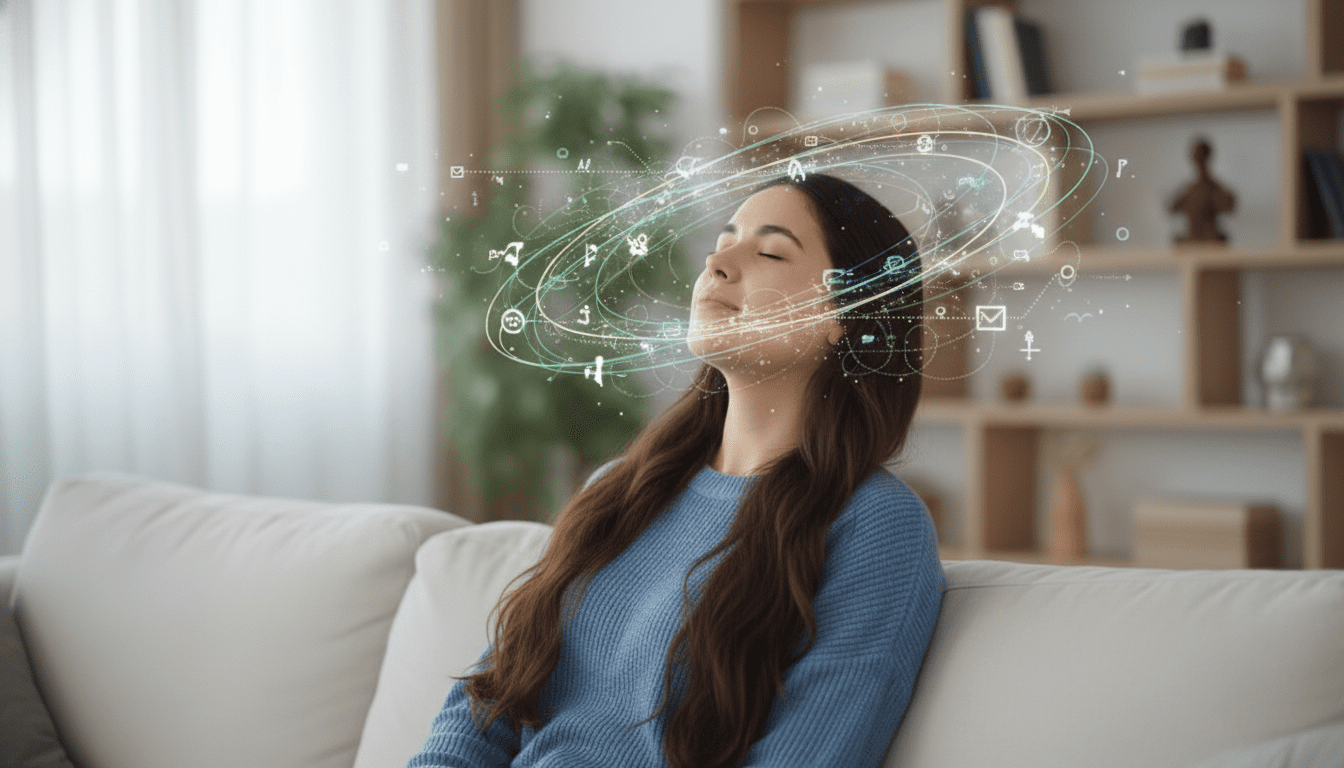
Most people think they are consciously choosing their thoughts, reactions, beliefs, emotions, and desires.
But much of human behavior is conditioned long before awareness fully develops.
Mental conditioning shapes how you experience life.
It influences :
How you present yourself.
How you interact with others.
How you react under pressure.
What hurts you.
What you fear.
What you avoid.
What you chase.
What you believe.
What makes you feel accepted.
What makes you feel important.
Even the version of yourself you try to become.
And the trivia, most of it happens automatically.
A small comment changes your mood.
A delayed message creates anxiety.
Someone succeeds and comparison appears instantly.
One criticism stays in your head for hours.
You try to relax but the mind refuses to slow down.
The reaction feels personal.
But often you never realise that the pattern was conditioned long ago.
This is why life can start feeling repetitive.
The same emotional loops.
The same fears.
The same relationship struggles.
The same inner conflicts.
The same reactions repeating in different situations.
This is also why The Mechanical Mind: Why Life Feels Repetitive is such an important foundation in the Back to You journey.
The majority of people in this world are not living consciously.
They are reacting through conditioning.
And until this becomes visible and something in their consciousness, life keeps moving in circles.
Mental Conditioning Is Invisible — That’s Why It Controls You
Most conditioning does not feel like conditioning.
It feels like:
“This is just who I am.”
That is what makes it powerful.
And when most people around them are also overthinking constantly, the pattern starts feeling normal.
The mind then assumes:
“This is just how human beings are.”
What is actually conditioning becomes accepted as reality simply because it is common.
Someone who becomes defensive easily may believe anger is naturally part of who they are.
Someone deeply afraid of rejection may think they are simply “too sensitive.”
But many reactions are learned patterns repeated so many times that they begin feeling like identity itself.
Imagine wearing tinted glasses since childhood.
After years of wearing them, you stop noticing the glasses completely.
You begin believing the color you see itself is reality.
Mental conditioning works the same way.
You may constantly seek approval because acceptance became emotionally important very early in life.
You may fear silence because your mind became dependent on distraction and stimulation.
You may feel restless doing nothing because conditioning tied your self-worth to productivity.
Most people are not consciously responding to life.
They are reacting from invisible programming.
This becomes clearer in Why You Overthink Everything
and
Respond Consciously Instead of Reacting Automatically
Once you begin seeing these patterns clearly, something important changes.
You stop blindly believing every thought and reaction.
You begin observing them instead.
And that observation is the beginning of freedom.
Conditioning Begins Before You Even Know Yourself
A child is not born feeling inadequate.
A child slowly learns it.
Conditioning begins long before conscious identity develops.
Parents.
Experiences.
School systems.
Religion.
Comparison.
Praise.
Punishment.
Fear.
Social approval.
All begins shaping the mind from the beginning.
A child quickly learns:
What gets love.
What creates rejection.
What is acceptable.
What must be hidden.
“Don’t cry.”
“Be successful.”
“Good children behave properly.”
“God is watching everything.”
“This is our tradition”
“What will people think?”
“Make us proud.”
“You need to score high”
Repeated emotional messages slowly become psychological structure.
And over time, that structure becomes identity.
A child constantly praised only for achievement may later become an adult who cannot relax without guilt.
A child repeatedly criticized for expressing emotions may later struggle with vulnerability in relationships.
A child constantly compared with others may unconsciously build life around insecurity and competition.
This is explored deeply in Conscious Parenting: The Work Begins With You
Most people never consciously choose these patterns.
They inherit them emotionally, unintentionally, unknowingly.
Then they spend years defending them as a personality.
Conditioning also shapes beliefs.
Religious identity.
Gender identity.
Political opinions.
Social values.
Success definitions.
Beauty standards.
Many beliefs are accepted emotionally long before they are consciously questioned.
This is why Why People Hold Onto Beliefs becomes such an important insight into how the conditioned mind protects familiarity.
Because familiarity often feels psychologically safer than truth.
Even when it creates suffering and doesn’t contribute to your wellbeing or happiness.
The Conditioned Mind Repeats the Same Patterns
Now, how do you identify this condition?
One of the clearest signs of conditioning is repetition.
The same emotional pain returns again and again.
The same arguments repeat.
The same fears reappear.
The same relationship struggles keep showing up in different forms.
Different people.
Different situations.
Same inner experience.
Most people think life is randomly doing this to them.
But often, the conditioned mind unconsciously recreates familiar emotional environments.
Someone raised around criticism may become deeply sensitive to judgment everywhere.
Someone conditioned through emotional inconsistency may unconsciously feel drawn toward unstable relationships because unpredictability feels emotionally familiar.
Someone raised around anger may automatically react defensively without even noticing the pattern.
The mind repeats what it knows.
Even when what it knows creates suffering.
This is why many people feel trapped inside invisible cycles.
The pattern changes externally.
But internally, the emotional experience remains almost identical.
This becomes clearer in Do You Notice the Cycles You Keep Living?
The conditioned mind does not seek truth first.
It seeks familiarity.
That is a very important difference.
Emotional Conditioning Quietly Shapes Your Relationships
Relationships reveal conditioning faster than almost anything else.
Because relationships activate emotional memory deeply.
Fear of rejection.
Validation seeking.
Jealousy.
Possessiveness.
People pleasing.
Emotional dependency.
Defensiveness.
Most people call these “relationship problems.”
But often they are unconscious survival patterns formed long ago.
Patterns most people never stop to question at any stage of life. So they continue reacting through them automatically, believing:
“This is just who I am.”
Someone emotionally unseen as a child may constantly seek reassurance from partners.
Someone conditioned through criticism may become defensive very quickly.
Someone taught that love must be earned may overextend themselves trying to keep everyone happy.
Someone emotionally abandoned earlier in life may panic during emotional distance.
Relationships often expose conditioning that daily routines temporarily hide.
Many people also confuse attachment with love.
Attachment often says:
“I need you so I can feel complete.”
Love says:
“I can share life with you without psychologically depending on you for my identity.”
That difference changes everything.
This is why Stop Seeking Happiness in Relationships
and
All Relationships Are Transactional — How Can You Be Different?
are important relationship-awareness articles within Back to You.
Many people are not relating consciously.
They are relating through conditioning.
And until conditioning becomes visible, relationships often become repetitive emotional loops instead of spaces of awareness, true expression, mutual understanding, and growth.
Society Profits From Unconscious Conditioning
A conditioned mind is easier to influence.
That is why modern society constantly competes for your attention.
Social media.
Advertising.
Comparison culture.
Outrage cycles.
Validation systems.
Endless stimulation.
The less conscious people are, the easier their emotional reactions become to manipulate.
A notification triggers dopamine.
Comparison creates insecurity.
Insecurity increases consumption.
Consumption creates temporary distraction.
Then the cycle repeats again.
Many people now feel mentally exhausted even when physically safe.
Because the nervous system rarely rests anymore.
Constant stimulation slowly conditions the mind to avoid silence.
That is why stillness feels uncomfortable to many people.
Even a few quiet minutes can create restlessness.
Modern conditioning also teaches people that self-worth depends on constant productivity.
Rest feels guilty.
Slowing down feels lazy.
Stillness feels unproductive.
The mind becomes trapped in endless psychological chasing.
Always becoming.
Rarely being.
This is why Quit the Rat Race: Why Competition Is Not Growth
and
connect so deeply with modern inner exhaustion.
Religious Conditioning Creates Fear, Guilt, and Division
Religion itself is not necessarily the problem.
Unquestioned conditioning that exists in it is what often causes it.
Many people inherit beliefs emotionally before they ever examine them consciously.
Fear becomes connected with identity.
Questioning becomes associated with guilt.
Belonging becomes tied to obedience.
Over time, beliefs stop being consciously explored and become psychological protection systems.
That is why questioning inherited beliefs can feel emotionally threatening even when contradictions become visible.
Many people are taught from childhood:
“Questioning is not polite.”
“Good people believe.”
“Doubt is sinful.”
The mind may genuinely seek clarity.
Because clarity is the natural state of the human mind when it is not clouded by fear, confusion, or conditioning.
But conditioning simultaneously fears losing identity, certainty, and belonging.
This becomes clearer in Why Is It So Hard to Question Religious Beliefs?
This does not mean rejecting spirituality.
It means learning to distinguish awareness from inherited fear.
That is why Spirituality and Religion: Are They Really the Same?
and
are important foundational articles within the Back to You ecosystem.
You Are Not Your Conditioning
When you realise this — if you ever truly realise this — everything begins to change.
The moment you start observing conditioning clearly, distance begins to appear between your conditioning and reality.
And in that distance, freedom quietly begins.
If you can observe anger, then anger is not your entire identity.
If you can observe fear, then fear is not your entire self.
If you can observe repetitive thoughts, then thoughts are not the totality of who you are.
This awareness creates space between you and unconscious patterns.
That space changes everything.
Most suffering comes from total identification with conditioning.
People say:
“I am angry.”
But often it is more accurate to say:
“Anger is moving through the conditioned mind right now.”
That small shift changes perception completely.
This is why What Is Self-Awareness?
and
Awareness vs Identification: The Point Where Freedom Begins
are foundational articles within Back to You.
The moment awareness becomes stronger than automatic identification, unconscious patterns begin weakening naturally.
Not through force.
Not through suppression.
But through clear observation.
You are not the conditioning.
You are the one becoming aware of it.
Awareness Is the Beginning of Inner Freedom
Freedom does not mean becoming emotionally perfect.
Freedom means becoming conscious enough to stop living completely automatically.
The conditioned mind reacts instantly.
Awareness introduces space.
Someone criticizes you.
Instead of reacting immediately, you notice the reaction forming.
Someone ignores you.
Instead of spiraling into overthinking, you observe the emotional movement clearly.
Someone triggers anger.
Instead of becoming the anger fully, you pause long enough to see it happening.
Because awareness interrupts automatic conditioning loops.
This is why How to Pause the Mind’s Automatic Reactions
is such an important step in the journey.
Awareness also changes your relationship with thought itself.
Instead of obeying every thought automatically, you begin observing thoughts like passing clouds.
Some thoughts are useful.
Some are fear-based conditioning.
Some are emotional echoes from the past.
Not every thought deserves belief.
This becomes clearer in Why Your Mind Feels Loud Even When Life Is Quiet
and
Why 90% of Meditation Is Done for the Wrong Reason
Awareness is not aggressive control.
It is clear observation.
And slowly, life becomes less mechanical.
Reactions soften.
Clarity increases.
Inner space grows.
You begin responding consciously instead of unconsciously repeating the past.
That is where real inner freedom begins.
Key Takeaways
- Mental conditioning shapes most unconscious behavior, emotional reactions, beliefs, and identity patterns.
- Conditioning begins early through family, society, religion, comparison, reward, fear, and emotional experiences.
- Many repetitive emotional struggles and relationship patterns are conditioned responses replaying automatically.
- Modern society constantly reinforces conditioning through comparison, stimulation, validation, and psychological distraction.
- Awareness creates distance between you and unconscious conditioning patterns.
- You are not trapped by conditioning once you begin observing it consciously.
- Inner freedom begins when awareness interrupts automatic reactions.
The moment you begin seeing conditioning clearly, life stops feeling completely automatic.
Frequently Asked Questions
What is mental conditioning in simple words?
Mental conditioning is the unconscious process through which repeated experiences, emotional patterns, beliefs, fear, reward, family influence, society, and environment shape the way a person thinks, reacts, behaves, and experiences life. Much of human behavior becomes conditioned automatically over time without conscious awareness.
How does mental conditioning affect human behavior?
Mental conditioning affects behavior by creating automatic emotional and psychological patterns. Reactions such as anger, fear, comparison, overthinking, approval-seeking, emotional dependency, defensiveness, and insecurity often come from conditioned mental loops rather than conscious choice. These reactions continue repeating until awareness interrupts them.
Can childhood experiences create lifelong mental conditioning?
Yes. Childhood experiences strongly shape mental conditioning because the mind is highly impressionable early in life. Repeated emotional experiences involving criticism, praise, fear, rejection, comparison, religion, pressure, emotional neglect, or approval can influence identity, emotional reactions, relationships, and self-worth for many years.
What is the difference between awareness and conditioning?
Conditioning is unconscious psychological programming built through repetition, emotional memory, fear, and learned behavior. Awareness is the ability to consciously observe thoughts, emotions, reactions, and beliefs without immediately identifying with them. Conditioning reacts automatically, while awareness creates clarity and conscious response.
How do you know if you are mentally conditioned?
Signs of mental conditioning include repetitive emotional reactions, people pleasing, overthinking, comparison, defensiveness, fear of rejection, emotional triggers, recurring relationship problems, insecurity, and automatic behavioral patterns. If emotional reactions repeat constantly, conditioning is usually operating beneath conscious awareness.
Can mental conditioning affect relationships?
Yes. Mental conditioning strongly affects relationships through emotional dependency, attachment patterns, validation-seeking, fear of abandonment, jealousy, insecurity, defensiveness, and unconscious emotional reactions. Many relationship struggles are deeply connected to conditioned emotional patterns formed earlier in life.
Is it possible to break unconscious conditioning?
Yes. Unconscious conditioning begins weakening when awareness increases. The more clearly a person observes thoughts, emotional reactions, fears, beliefs, and repetitive patterns without blindly identifying with them, the more conscious choice becomes possible. Awareness interrupts automatic conditioning and gradually creates inner freedom.
Why do people repeat the same emotional patterns in life?
People often repeat emotional patterns because the conditioned mind seeks familiarity, even when that familiarity creates suffering. Childhood conditioning, emotional memory, attachment patterns, fear, and unconscious habits can recreate similar inner experiences repeatedly until awareness interrupts the cycle consciously.
You may not control how conditioning entered your mind — but awareness can stop it from unconsciously controlling your life forever.