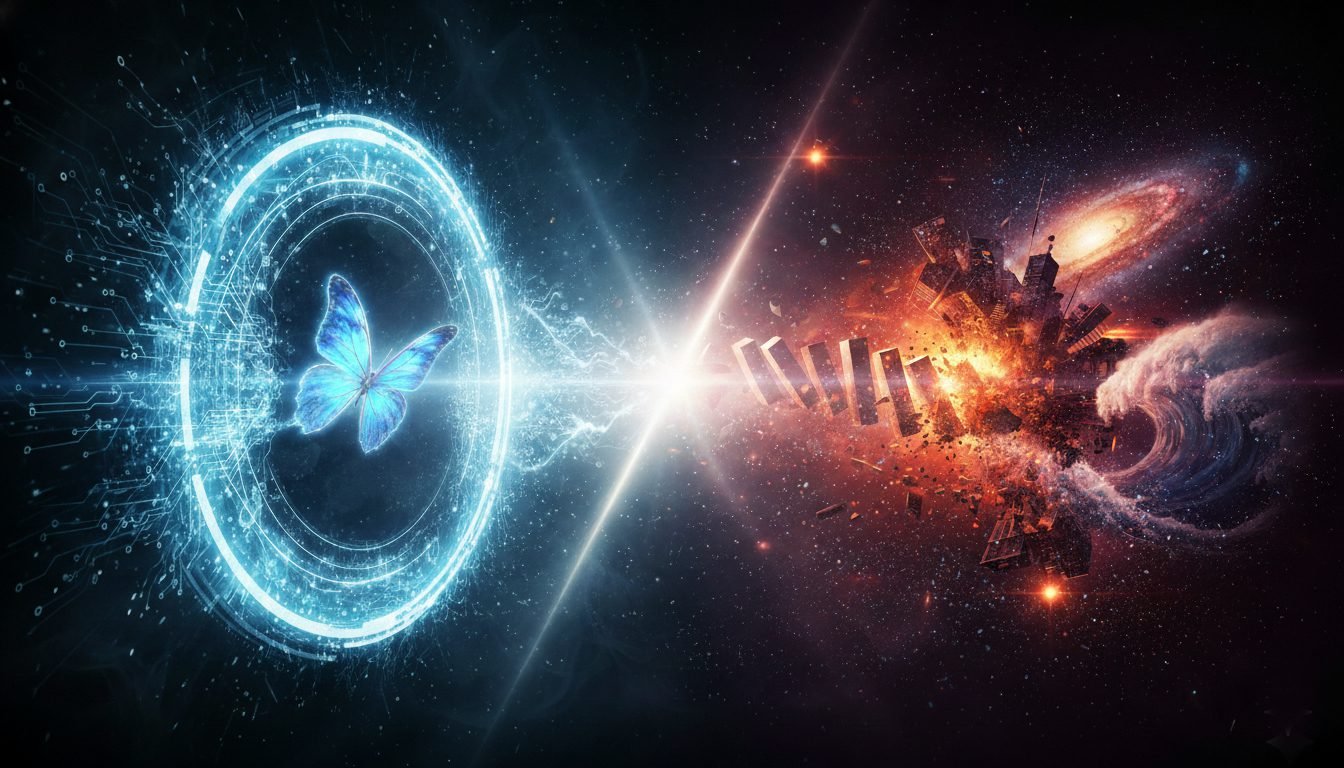


How to remain sane in an insane world is a question more people are asking as life accelerates, opinions clash, and the noise never stops. The world feels louder, faster, and more divided than ever. But sanity doesn’t come from fixing the world — it comes from understanding how your mind reacts to it. Here’s how to remain sane in an insane world without escaping or becoming numb.
The Numbers Don’t Lie: We’re Overwhelmed
Something is happening to human minds globally.
And the statistics are alarming:
80% of people now experience information overload daily — up from 60% just four years ago.
Anxiety disorders increased 52% among young people (ages 10-24) between 1990 and 2021.
76% of the global workforce reports that information overload causes daily stress and anxiety.
These aren’t just numbers.
They’re millions of people feeling exactly what you might be feeling right now:
Overwhelmed. Anxious. Like the world is moving too fast to process.
The World Feels Louder Than Ever — Because It Is
Look around for a moment.
Everyone seems to be rushing.
Chasing something.
Defending opinions.
Comparing lives.
Arguing online.
Trying to keep up with impossible expectations.
The world moves faster than it ever has before.
Information never stops.
Notifications never end.
Opinions arrive every second.
Outrage cycles every hour.
Here’s what your brain is actually processing every single day as per some latest stats:
The average person now consumes 100 gigabytes of data daily — equivalent to processing 105,000 words.
You’re exposed to 15 blog articles, 1,427 words per post, and 241 messages every day.
In 2026 alone, 392 billion emails are sent per day.
Global data volume is expected to reach 394 zettabytes by 2028 — more than double what it was in 2024
It can begin to feel overwhelming.
Not because you’re weak.
Not because you can’t handle life.
But because the human mind was never designed to process this much noise.
Your brain evolved to handle:
A tribe of 150 people.
Local problems.
Immediate threats.
Face-to-face communication.
Now you’re expected to care about:
Global crises.
Strangers’ opinions.
Every political development.
Everyone’s highlight reel on social media.
Catastrophes happening thousands of miles away.
When the environment becomes chaotic, the mind easily becomes chaotic too.
The Fire Hose of Information
Imagine trying to drink from a fire hose.
Water blasts out at full pressure.
You open your mouth to drink.
But the force is overwhelming.
You can’t swallow fast enough.
You can’t process it.
You just get hit in the face repeatedly.
This is modern information consumption.
News. Social media. Notifications. Messages. Emails. Updates. Alerts.
The fire hose never stops.
And you’re standing there trying to drink it all.
Research shows that information overload leads to a 27.1% increase in negative emotions related to work and life.
It causes poor decision-making, decreased productivity, and cognitive pressure that your mind was never built to sustain.
Employees spend 2.5 hours per day just searching for the right information through the noise.
Your mind wasn’t built for this volume.
And there is no wonder it feels insane.
But there’s another layer to this problem that makes it even worse:
It’s not just the volume of information that’s overwhelming. It’s that every piece of information contradicts the last one.
One day you’re convinced by a minimalism video. The next day, a wealth-building post makes perfect sense.
Then spiritual detachment.
Then entrepreneurial hustle.
Each philosophy sounds right in the moment — creating a form of psychological tension similar to what psychologists call cognitive dissonance, and what we might informally describe as “belief whiplash.”
Your mind is trying to land on solid ground, but every belief system keeps shifting. This phenomenon of having too many contradictory answers is explored in depth in Why Too Much Information Is Making You More Confused.
The Real Problem Is Not Just the World
At first it appears the world itself is the problem.
Politics feels chaotic.
Social media feels aggressive.
News feels alarming.
Competition feels constant.
But if you observe closely, something interesting appears:
The real pressure is not just outside. It’s inside the mind.
The world presents events.
But your mind:
Interprets them.
Judges them.
Compares them.
Predicts the future based on them.
Replays the past because of them.
Two people can experience the same chaotic world completely differently.
One feels constantly anxious.
The other remains relatively steady.
The difference isn’t the world. It’s how the mind processes the world.
Studies confirm this: social media overload indirectly elevates anxiety levels not through the information itself, but through the mental fatigue it creates.
When users experience social media fatigue, there’s a measurable decrease in health self-efficacy — your confidence in managing your own well-being drops.
This constant movement of thought creates internal tension.
This is explored more deeply in The Mechanical Mind: Why Life Feels Repetitive.
The Mental Health Crisis Is Real
This isn’t just anecdotal.
The data shows a genuine crisis:
Between 2019 and 2022, anxiety symptoms in adults increased from 15.6% to 18.2%.
Depression symptoms jumped from 18.5% to 21.4% in the same period.
1 in 10 children aged 3-17 now have a current anxiety diagnosis, while 21% of adolescents report symptoms.
Depression and anxiety cause a global productivity loss of trillion annually.
Over 720,000 people die by suicide every year — making it the third leading cause of death among 15-29-year-olds.
Yet despite this crisis, only 23% of adults received mental health treatment in the past year.
This clearly shows that most people are struggling silently.
Trying to remain sane in a world that feels increasingly insane.
Without understanding why it’s happening or what to do about it.
The Insanity Often Comes From Collective Conditioning
Much of what feels insane in the world is actually collective conditioning playing out at scale.
Groups defend identities.
Nations defend ideologies.
Communities defend beliefs.
Individuals defend their worldview.
Everyone becomes certain they’re right.
Few people are actually observing clearly.
When identity becomes stronger than awareness, conflict grows.
This is why entire societies sometimes behave irrationally.
Not because people are evil or stupid.
But because they’re reacting from unexamined conditioning.
Understanding this can already bring a surprising amount of calm.
When you see that most “insanity” is just conditioning playing out automatically, it becomes less personal.
You’re not fighting evil.
You’re witnessing patterns.
You Cannot Control the Ocean
Imagine standing on a beach during a storm.
Waves crash violently.
Wind howls.
The ocean is chaotic, unpredictable, powerful.
Now imagine trying to calm the ocean with your hands.
Pushing the waves back.
Telling the wind to stop.
Demanding the storm be reasonable.
Absurd, right?
This is what most people do with the world.
They try to control:
The news cycle.
Other people’s opinions.
Global events.
Economic changes.
Political systems.
Social trends.
The mind desperately wants certainty.
But the world doesn’t offer that.
Research shows that trying to control uncontrollable information creates a state called “information fear of missing out” (IFoMO) — which significantly elevates workplace stress and leads to exhaustion.
Trying to force control over uncontrollable events drains mental energy completely.
You cannot calm the ocean. But you can learn to stand steady while it rages.
This idea is explored further in Release the Need to Control What You Cannot Control.
How to Remain Sane: Observe the Mind Instead of Believing It
Remaining sane in a chaotic world does not mean escaping the world.
It doesn’t mean moving to a mountain.
Or deleting all social media.
Or pretending nothing matters.
It means understanding how your mind works.
When you begin observing:
How thoughts arise
How reactions appear automatically
How emotions move through you
How interpretation shapes experience
Something begins to change.
You stop believing every thought.
You stop reacting to every trigger.
You begin to see patterns clearly.
This shift from reaction to observation creates space.
And in that space, clarity appears.
The world is still chaotic.
But you’re no longer drowning in your mind’s interpretation of it.
This transition is described in Respond Consciously Instead of Reacting Automatically.
Why Understanding Doesn’t Always Change Behavior
Here’s something many people experience but rarely talk about:
You read articles like this.
You understand everything intellectually.
You meditate. You practice mindfulness. You create boundaries with social media.
For a few hours — maybe even a few days — you feel calm. Clear. Centered.
And then life happens.
Someone cuts you off in traffic — you react instantly.
A work email arrives — anxiety floods back.
You see a triggering post online — you’re pulled right back into the chaos.
An argument starts — you lose all the calm you cultivated.
Within minutes, you’re back in the wave.
All that understanding, all that meditation, all that clarity — gone.
And you think: “What’s wrong with me? I know better. Why can’t I stay calm?”
The Gap Between Knowing and Being
This gap is not a personal failure.
It’s the difference between intellectual understanding and integrated awareness.
You can understand that the mind creates chaos.
But when the trigger hits, the reaction happens faster than understanding.
You can know that comparison is pointless.
But when you see someone’s success, the urge to compare appears automatically.
You can believe that the present moment is all that exists.
But when anxiety about the future arrives, it feels completely real.
Why does this happen?
Because understanding lives in the thinking mind.
But reactions come from deeper conditioning — patterns built over years, decades, even generations.
Your nervous system has been trained to react in specific ways.
Reading one article doesn’t reprogram years of conditioning.
Meditating for 20 minutes doesn’t erase lifelong patterns.
Realize this.
The Conditioning Runs Deeper Than Understanding
Think of it like this:
You’ve been driving on the same mental highways for years.
Fear highway. Comparison highway. Anxiety highway. Reaction highway.
These routes are deeply grooved into your nervous system.
Now you learn about awareness. You understand presence. You practice observation.
You’ve discovered a new route.
But here’s what happens:
When stress appears, your mind automatically takes the old highway.
Not because you’re weak.
Not because you don’t understand.
But because that pathway has been travelled thousands of times and driving there is so much easier.
It’s automatic. Effortless. Easy. Familiar. The default route.
The new route — awareness, presence, observation — is unfamiliar.
It requires conscious effort. Attention. Intention.
And when you’re triggered, conscious effort is the first thing that disappears.
Meditation Creates Islands, Not Permanent States
Many people misunderstand what meditation and mindfulness actually do. Unfortunately, even some coaches and teachers contribute to this confusion by passing on simplified or half-understood explanations.
This misunderstanding around meditation is explored further in Why 90% of Meditation Is Done for the Wrong Reason.
They expect: “If I meditate, I’ll be calm all the time.”
But that’s not how it works.
Meditation creates temporary islands of clarity.
20 minutes of silence. A moment of presence. A brief window of awareness.
These islands are valuable. They show you what’s possible.
But then you step off the meditation cushion and back into your conditioned life:
Same job. Same relationships. Same triggers. Same patterns.
The conditioning is still there.
The issue isn’t that meditation “doesn’t work.”
The issue is expecting 20 minutes of practice to override decades of conditioning.
So What Actually Works?
If understanding isn’t enough, and meditation is temporary, what creates lasting change?
Continuous observation in real situations.
Not just during meditation.
Not just when reading articles.
But in the actual moments when you’re being pulled back into chaos.
Here’s the practice:
1. Notice when you lose control
Don’t judge it. Don’t fight it. Just notice:
“I’m reacting. The pattern is running again.”
2. Don’t expect to stop the reaction mid-stream
This is crucial. You probably won’t catch it in time.
The reaction will happen. You’ll get angry. You’ll feel anxious. You’ll compare yourself.
That’s okay.
3. Observe it afterward
After the reaction passes, look at what happened:
What triggered it?
How did the body respond?
What thoughts appeared?
How quickly did you get pulled in?
4. Don’t try to “fix” yourself
The goal isn’t to become a perfectly calm person who never reacts.
The goal is to see the patterns clearly.
5. The gap will slowly increase
At first, you’ll notice the reaction after it’s over.
Then you’ll notice it while it’s happening.
Eventually, you’ll notice it before it fully takes over.
That gap — between trigger and full reaction — is where freedom lives.
But it doesn’t appear overnight. You need to be patient and consistently put this into practice. It involves effort.
Why You Keep Falling Back Into the Wave
You keep falling back because:
Life doesn’t pause for your practice.
Triggers don’t wait until you’re “ready.”
Stress doesn’t check if you meditated that morning.
Chaos doesn’t care about your understanding.
The world keeps moving. And your conditioning is still active.
This is normal. Expected. Not failure.
Every time you notice you’ve been pulled back into reactivity, that noticing itself is progress.
Most people never notice. They stay in the wave their entire lives. They think that is normal.
You’re noticing. That’s the beginning.
The Realistic Timeline
Let’s be honest about what change actually looks like:
Month 1-3: You’ll understand intellectually. You’ll have glimpses of clarity. You’ll fall back into patterns constantly. This is normal.
Month 3-6: You’ll start noticing reactions while they’re happening. You still can’t stop them, but you can see them. This is progress.
Month 6-12: The gap between trigger and reaction begins to widen. Sometimes you’ll catch it early. Sometimes you won’t. Both are okay.
Year 1+: Reactions still happen, but they don’t consume you as completely. They pass faster. You return to clarity quicker.
This isn’t linear. You’ll have setbacks. That’s part of the process.
Some days you’ll feel clear and present.
Other days you’ll be completely reactive and wonder if you’ve learned anything at all.
Both days are normal.
What to Do When You Lose Control Again
You will lose control again. Guaranteed.
When it happens:
Don’t spiral into self-judgment.
“I’m terrible at this. I’ll never change. What’s wrong with me?”
That’s just another pattern. Another wave.
Instead:
“Oh, there it is again. The pattern ran. I got pulled in. Interesting.”
Curiosity, not judgment.
Observation, not condemnation.
The fact that you noticed you lost control means you’re not completely lost.
Awareness is returning. Even if it’s after the fact.
This is how change happens:
Not through perfection.
Not through never reacting.
But through seeing the pattern more clearly, more often, with less judgment.
Eventually, the pattern weakens.
Not because you fought it.
But because you saw it clearly enough that it lost its automatic grip.
The Most Important Thing to Remember
Understanding these concepts intellectually is step one.
Practicing meditation is step two.
But step three — the one most people miss — is living with the understanding that you will fail repeatedly.
You will fall back into the wave.
You will react automatically.
You will lose your center.
This doesn’t mean it’s not working.
It means you’re human, living in a chaotic world, with decades of conditioning still active in your nervous system.
The work isn’t to become immune to chaos.
The work is to notice chaos, fall into it, and return to clarity — over and over and over.
Each time you return, the path back gets a little clearer.
Each time you notice, awareness gets a little stronger.
Each time you fall, you learn something about the pattern.
This is the actual work. Not the meditation. Not the reading. But the falling and returning.
That’s where sanity is built.
Not in perfect calm, but in the ability to return to clarity after being lost in chaos.
The Practical Steps: Reduce the Noise
One practical step toward staying sane is surprisingly simple:
Reduce unnecessary noise entering your mind.
Not all information is helpful.
Not every opinion deserves attention.
Not every argument needs your participation.
Not every crisis requires your emotional energy.
The numbers prove this works:
34% of employees feel frustrated or burnt out when they lack tools to manage information.
But when organizations implement “digital detox hours” — specific periods when notifications stop — employee well-being and concentration improve dramatically.
Knowledge workers spend 88% of their workweek communicating across multiple channels — meaning only 12% on actual productive work.
Many people consume constant stimulation without noticing its cumulative effect:
Endless news cycles (90% repetition, 10% new information)
Social media debates (where no one ever changes their mind)
Outrage culture (designed to keep you engaged, not informed)
Comparison scrolling (everyone’s highlight reel vs. your blooper reel)
Your mind absorbs all of it.
And gradually, it becomes your internal state.
Reducing unnecessary input protects mental clarity.
This doesn’t mean ignorance.
It means discernment.
Ask yourself:
Is this information useful?
Does this require my attention right now?
Am I consuming this to understand, or to react?
Silence is not emptiness.
It is space where clarity returns.
Come Back to the Present Moment
Most anxiety about the world comes from thinking about the future.
What might happen.
What could go wrong.
What society is becoming.
Where this is all heading.
But here’s the truth:
Life only happens in the present moment.
Right now, in this actual moment, are you okay?
Not “will you be okay if X happens.”
Not “were you okay when Y happened last year.”
Much of the mind’s stress comes from believing that happiness exists somewhere in the future or in a different situation, a pattern explored further in The “If I Get That, I’ll Be Happy” Illusion.
Right now. This moment. Are you actually okay?
Usually, the answer is yes.
The chaos is in your thoughts about the past and future.
Not in this moment.
When attention returns to what is actually happening now, the mind settles naturally.
This is explored deeply in Come Back to the Present Moment.
You Don’t Have to Fix the World to Live Clearly
One quiet misunderstanding causes enormous pressure:
People feel responsible for fixing everything around them.
The economy.
Politics.
Human behavior.
Social problems.
Global crises.
Other people’s ignorance.
But clarity begins somewhere much closer.
It begins with understanding your own mind.
When one person becomes:
Less reactive
Less fearful
Less conditioned
More aware
Something meaningful changes.
Not because the world becomes perfect.
But because one mind becomes clear.
And a clear mind responds differently to chaos.
It doesn’t add more chaos.
It doesn’t spread more fear.
It doesn’t react blindly.
It responds consciously.
And that matters more than you think.
The Eye of the Hurricane
A hurricane is massive, violent and destructive.
But at its center — the eye — there is calmness.
Complete stillness.
While the storm rages all around, the center remains peaceful.
This is how to remain sane in an insane world.
You don’t stop the hurricane.
You don’t pretend it’s not happening.
You don’t escape to another planet.
You find the eye.
The still point within the chaos.
That still point is awareness.
The world will continue being chaotic.
People will continue disagreeing.
Events will remain unpredictable.
But your inner state doesn’t have to mirror the chaos outside.
Sanity is not created by controlling the world.
It appears when the mind stops reacting blindly to everything it sees.
Key Takeaways: How to Remain Sane in an Insane World
- 80% of people now experience daily information overload — your overwhelm is statistically normal, not personal weakness
- Anxiety and depression increased 25-52% globally in recent years — this is a collective crisis, not individual failure
- Information overload causes 27.1% increase in negative emotions and measurable decreases in mental health
- Most “insanity” is collective conditioning playing out at scale — understanding this reduces personal reactivity
- You cannot control the information ocean, but you can learn to stand steady within it
- Understanding intellectually isn’t enough — conditioning runs deeper than knowledge and requires continuous practice
- Falling back into reactivity is normal and expected — the work is noticing and returning, not staying perfect
- Change takes months/years, not days — realistic timeline: 3-6 months to notice patterns while happening, 1+ year for reactions to weaken
- Reducing noise (digital detox, selective information) measurably improves well-being and concentration
- Most anxiety lives in thoughts about the future — the present moment is usually manageable
- You don’t need to fix the world to live clearly — clarity begins with your own mind
Frequently Asked Questions
How to remain sane in an insane world?
Remain sane by observing how your mind reacts to chaos rather than believing every anxious thought. Reduce information noise, return attention to the present moment, and understand that most chaos is collective conditioning, not personal threats requiring constant reaction. The data shows 80% experience information overload — your overwhelm is normal.
Why does the world feel so chaotic today?
The world feels chaotic because of measurable information overload: average people consume 34GB of data daily, equivalent to 100,000 words. Your brain evolved for 150-person tribes and local problems, not global awareness and 333 billion daily emails. This mismatch creates genuine cognitive stress.
Is it normal to feel overwhelmed by the world?
Yes, completely normal. Studies show anxiety symptoms increased from 15.6% to 18.2% between 2019-2022, depression from 18.5% to 21.4%. The human mind evolved for small tribal groups and local problems, not constant digital stimulation and global crises. Feeling overwhelmed is a natural response to unnatural information volume.
Why do I understand mindfulness but can’t stay calm?
Because understanding lives in your thinking mind, but reactions come from deeper nervous system conditioning built over years. Your mind automatically takes old neural pathways when triggered. Meditation creates temporary islands of clarity, not permanent states. Change requires continuous observation in real situations, not just intellectual understanding.
How long does it take to actually change reactive patterns?
Realistically: 1-3 months for intellectual understanding and glimpses of clarity. 3-6 months to notice reactions while they’re happening. 6-12 months for the gap between trigger and reaction to widen. 1+ year for reactions to pass faster and consume you less. This isn’t linear — setbacks are normal and part of the process.
Why do I keep falling back into anxiety after meditation?
Because life doesn’t pause for your practice. You step off the meditation cushion back into the same job, relationships, and triggers. Conditioning is still active in your nervous system. Falling back is normal, expected, and not failure. The work is falling and returning repeatedly, not staying permanently calm.
Does remaining sane mean ignoring the world?
No. It means understanding how your mind interprets and reacts to events rather than being completely overwhelmed by them. You can be informed without being consumed. Research shows selective information consumption (vs. constant intake) improves well-being without reducing actual useful knowledge.
Why do people react so strongly to opinions and beliefs?
Because beliefs often become identity. When someone challenges your belief, your brain interprets it as a threat to your sense of self. The reaction is protective, automatic, and usually unconscious — this is collective conditioning, not personal malice.
Can reducing social media actually improve mental clarity?
Yes, significantly. Studies show social media overload elevates anxiety, decreases health self-efficacy, and causes emotional exhaustion. Social media is designed for engagement (outrage, comparison, fear), not clarity. Limiting exposure measurably reduces comparison anxiety and outrage fatigue.
What should I do when I lose control and react again?
Don’t spiral into self-judgment (“I’m terrible at this”). Instead, observe with curiosity: “The pattern ran. I got pulled in. Interesting.” The fact that you noticed you lost control means awareness is returning. This is how change happens — not through perfection, but through seeing patterns more clearly, more often, with less judgment.
Is the goal to become emotionally detached from the world?
No. The goal is clarity, not detachment. You can care about things without being consumed by anxiety about them. You can respond to problems without drowning in reactivity. Clarity allows appropriate response instead of constant panic.
Can one person remaining calm actually make a difference?
Yes. A clear mind responds differently to situations and influences the environment around it. Reactivity spreads. But so does clarity. You can’t fix the world, but you can stop adding more chaos to it through blind reaction.
The world may remain chaotic. People will disagree. Events will remain unpredictable.
But your inner state does not have to mirror the chaos outside.
Sanity is not created by controlling the world. It appears when the mind stops reacting blindly to everything it sees.
Clarity does not require a perfect world. It requires a mind that can see clearly within it.
And the work is not perfection. It is falling into chaos and returning to clarity — over and over, with less judgment each time.