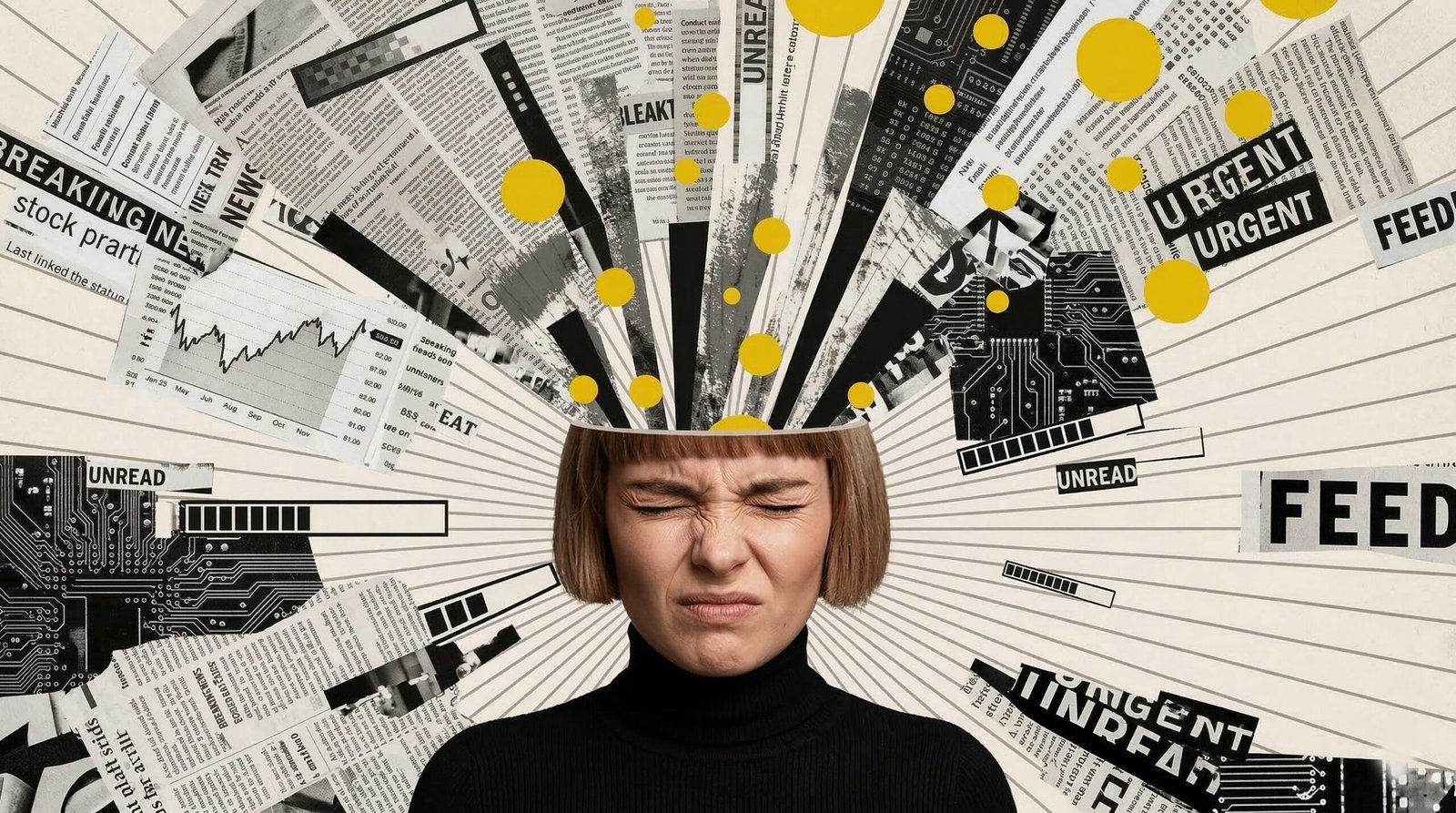

Cause and effect explains not only actions and consequences, but also emotional atmosphere, energy transfer, and what many people call karma.
The Coffee Stain Nobody Noticed
A manager spills her coffee on important documents during a morning meeting while reaching for it from the tray her assistant had brought.
She snaps at the assistant who brought the coffee.
The assistant feels tense. Goes back to his desk carrying that tension.
A colleague asks a simple question.
The assistant responds curtly.
The colleague feels dismissed. Withdraws.
Later, when the manager needs a report from that colleague and there’s hesitation. A slight delay. A subtle non-productive attitude.
The manager feels frustrated. “Why is everyone so difficult today?”
She doesn’t connect it to the coffee spill six hours earlier. Neither is she aware of the sequential consequences that took place.
But the chain was there all along.
One sharp word. One tense body. One withdrawn colleague. One delayed response.
No cosmic punishment.
Just cause and effect moving through a system.
We prefer Fate, but reality runs on Cause and Effect.
Most people are comfortable with fate.
It feels softer.
“It was meant to be.”
“Bad luck.”
“Karma.”
But cause and effect is less dramatic.
It asks you to look.
If your phone battery dies, you don’t blame destiny.
You check whether you charged it.
Life works the same way.
Sleep less. Energy drops.
Ignore exercise. Body weakens.
Speak harshly. Trust reduces.
No cosmic punishment.
Just mechanics.
The cause and effect principle is not mystical.
It is structural.
Cause and Effect Is Not Just Physical — It Is Emotional
Here is where it gets deeper.
Even when you do nothing “wrong” practically, something still moves.
Energy accumulates.
Atmosphere builds.
If you constantly create tension in a room, even silently, the room changes.
If you repeatedly hurt someone emotionally, something shifts in them.
You may walk away.
The imprint remains.
This is what many traditions call karma.
But remove the mysticism.
It is simply energy transfer.
You plant seeds in people’s nervous systems.
They react later.
Not because the universe kept score.
Because you altered the environment.
The Silent Tension
A father comes home stressed from work.
He doesn’t yell. Doesn’t complain. Says nothing.
But his body is tight. His face is hard. His presence is tense.
The children feel it.
They become quieter. More cautious. They tiptoe.
Nothing was said.
But something was transmitted.
If this happens daily for years, the children’s nervous systems adapt.
They learn to scan for emotional weather. To manage adult moods. To stay small.
The father never intended this.
But intention is not required for cause and effect to operate.
You plant seeds in people’s nervous systems.
They react later.
The Atmosphere You Create Eventually Returns
Imagine lighting incense in a closed room.
You may leave.
The fragrance remains.
Now imagine creating resentment in that same room.
The emotional air thickens.
Even if no one speaks about it.
This is not superstition.
This is psychological cause and effect.
When you repeatedly create fear and stress in others, they behave differently around you.
When you repeatedly create safety and joy, they open up.
The environment shifts.
And eventually, you live inside the atmosphere you helped build.
The Butterfly Effect Is Not Poetry — It Is Structure
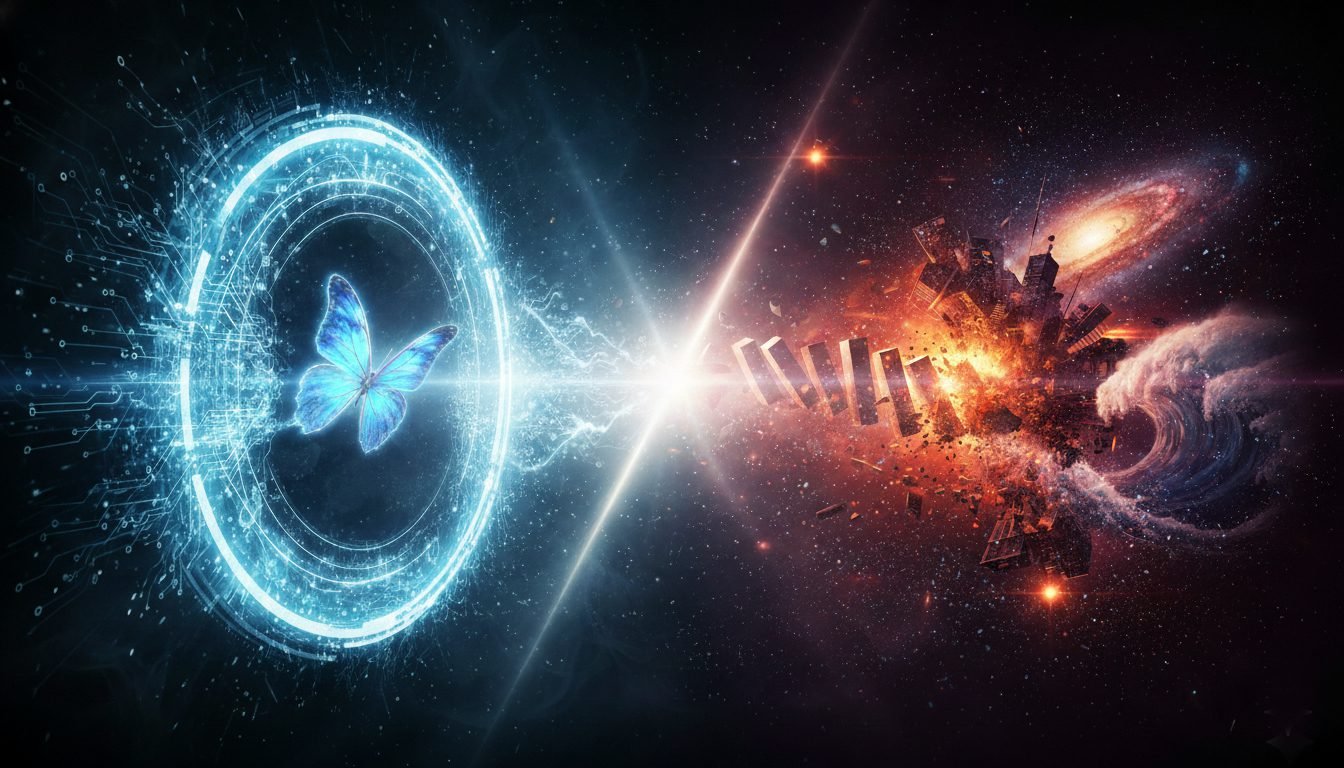
In chaos theory, small initial conditions can create massive future outcomes. This idea became widely known as the butterfly effect.
A tiny shift in one place can alter an entire system.
This is not fantasy. It is mathematics.
One careless comment can damage a child’s confidence for years.
One act of encouragement can change the direction of someone’s life.
Small causes.
Large effects.
You do not see the chain immediately.
But the chain exists.
The Comment That Lasted Thirty Years
A teacher tells a seven-year-old: “You’re not good at math.”
One sentence. Five seconds.
The child believes it.
Avoids math. Avoids STEM subjects. Makes career choices around this belief.
Thirty years later, he still says: “I was never good with numbers.”
The teacher doesn’t remember the comment.
But the effect remained.
Small causes. Large effects.
You do not see the chain immediately.
But the chain exists.
Ancient Philosophy Saw This Clearly
Aristotle described causality as fundamental to understanding reality. Nothing happens without cause.
Isaac Newton simplified it further in physics: every action has an equal and opposite reaction.
In psychology, Carl Jung spoke about unconscious material shaping future experience when not addressed.
Different language. Different fields.
Same principle.
Unseen causes produce visible effects.
If you suppress anger for years, it eventually appears as anxiety, illness, or conflict.
If you cultivate resentment, it alters your perception.
Life does not forget.
Not spiritually.
Structurally.
Energy Is Not Magic — It Is Influence
When people say, “Negative energy comes back,” they often mean something mystical.
But look closer.
If you repeatedly create stress in your relationships, those relationships weaken.
If you repeatedly create harmony, trust deepens.
If you spread panic, panic spreads.
If you spread stability, stability spreads.
This is not divine reward.
This is systemic feedback.
Think of a bank account.
You deposit tension daily.
You cannot expect calm withdrawal later.
You deposit respect daily.
You build credit.
The universe does not punish. It reflects.
Even Inaction Is a Cause
Doing nothing is also a cause.
Ignore your health. The body responds.
Ignore emotional repair. Distance grows.
Ignore injustice. Systems decay.
Cause and effect does not require dramatic action.
Accumulation is enough.
Like rust on metal.
It forms slowly.
But it forms.
This Is Where “Karma” Becomes Logical
What many call karma is simply accumulated cause and effect across time.
Not mystical punishment.
Not spiritual bookkeeping.
Repeated patterns create predictable futures.
If you consistently act from ego, isolation increases.
If you consistently act from awareness, stability increases.
No moral drama.
Just long-term momentum.
The seeds you plant shape the ground you walk on later.
Is God Keeping a Ledger?
Many religious interpretations describe life as a moral accounting system.
A higher power watches.
Records.
Balances.
Rewards.
Punishes.
As if somewhere above, a cosmic accountant is maintaining your trial balance.
This image feels powerful.
It also feels frightening.
But pause for a moment.
The Questions That Change Everything
You lie repeatedly. Trust weakens.
Did God reduce the trust?
Or did your actions erode reliability?
You neglect your health. The body weakens.
Did God adjust your energy levels?
Or did lack of care create decline?
You create fear in your household. Tension builds.
Did heaven issue that tension?
Or did your behavior create the atmosphere?
Gravity Doesn’t Need Permission
Cause and effect does not need supervision.
It operates automatically.
Like gravity.
You do not fall because God pushes you down.
You fall because gravity functions consistently.
In the same way, consequences arise because systems respond.
Early human beings did not have scientific language.
So they personified structure.
They turned consequence into judgment.
They turned mechanics into morality.
It was easier to explain life through a divine bookkeeper than through invisible patterns.
But whether you call it God, karma, or universal law, the structure remains the same:
Actions create conditions. Conditions produce outcomes.
No celestial trial required.
This understanding does not remove the sacred.
It removes fear.
If there is divinity, it may be in the intelligence of the structure itself.
The consistency.
The precision.
The reliability.
Not in punishment.
Not in reward.
When you see this clearly, you stop acting out of fear of judgment.
You begin acting out of understanding.
And understanding creates better outcomes than fear ever can.
The Present Moment Is Where Causes Begin
The future is not mysterious. It is being constructed now.
Every reaction plants something.
Every habit strengthens something.
Every word alters something.
This is why awareness matters.
If you have explored Step 2 – See the Mind Clearly, you already know how automatic reactions create consequences.
And in Step 3 – Pause the Mind’s Reactions, you see how interrupting a cause changes the future effect.
Pause is power.
Because pause alters the chain.
Seeing Cause and Effect Ends Victim Mentality
Victim mindset asks:
“Why is this happening to me?”
Clarity asks:
“What led to this?”
This is not self-blame.
It is pattern recognition.
Some causes are personal.
Some are environmental.
Some are collective.
But something always precedes something else.
Seeing that restores clarity.
Take-Home Clarity
- Cause and effect explains physical, emotional, and social outcomes.
- Energy accumulation is influence over time, not mystical punishment.
- Small actions can create large long-term consequences.
- Atmosphere is built through repeated behavior.
- The present moment is where future effects begin.
FAQs
1. Is cause and effect the same as karma?
Karma can be understood logically as accumulated cause and effect across time.
2. Does this mean everything is my fault?
No. It means everything has contributing causes. Some are personal, some external.
3. What is meant by “energy transfer”?
It refers to emotional and psychological influence. Your behavior alters environments and people.
4. Is the butterfly effect real?
Yes. In chaos theory, small changes in systems can lead to large outcomes.
5. Can unseen causes affect my life?
Yes. Unconscious patterns often shape visible results.
6. How does awareness change outcomes?
By interrupting automatic reactions, you alter future consequences.
7. Is fate completely false?
Many things attributed to fate are accumulated causes we did not observe.
8. What is the first step to applying this principle?
Pause and ask: “What is this creating?” before you act.