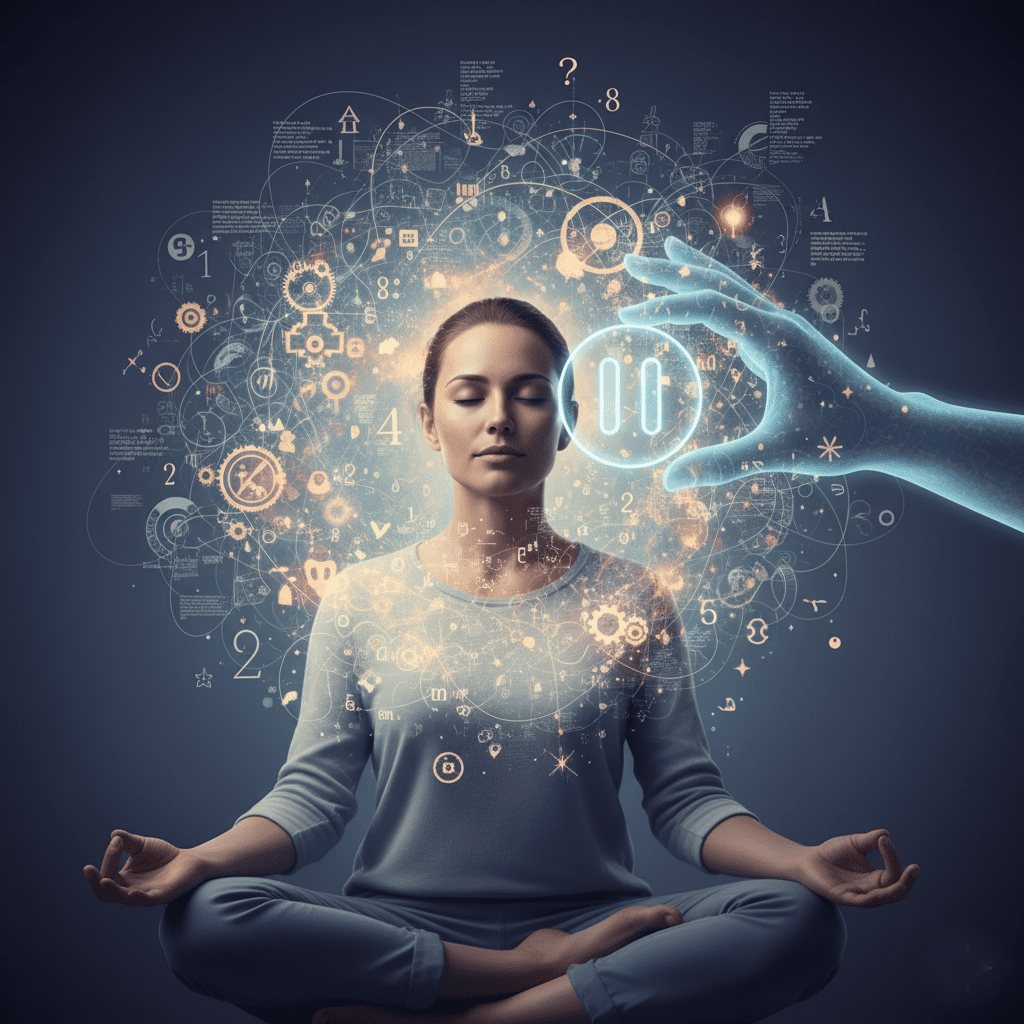


Responding instead of reacting is the shift that happens when awareness steps in before old patterns take over.
Why Most Action Is Actually Reaction
Most of what people call action is reaction.
Something happens.
A word is spoken.
A message arrives.
An expectation is not met.
And the body responds instantly.
The tone changes.
The chest tightens.
The mind rushes to defend, explain, or attack.
By the time awareness arrives, the reaction has already happened.
This is not because people are careless.
It is because the reaction is automatic.
It is driven by memory, conditioning, and past experiences.
Reaction is the past repeating itself through the present.
The Motion Sensor Light
A motion sensor light sits outside a door.
Something moves nearby.
The light flicks on.
Instantly. Automatically.
It doesn’t ask what moved.
A person? A cat? A leaf blowing past?
It just reacts to movement.
The same trigger, the same response, every time.
Most human behavior works this way.
A word is spoken.
The reaction flicks on.
Instantly. Automatically.
No assessment. No choice.
Just the same pattern repeating.
The motion sensor can’t choose.
You can.
But only if awareness arrives before the light switches on.
The Speed of Reaction
Reaction is fast.
It does not wait for clarity.
It does not ask whether the response is appropriate.
It simply repeats what has worked or protected in the past.
This speed creates the illusion of control.
But look closely.
If reactions were intelligent, the same conflicts would not repeat.
The same regrets would not appear.
The same apologies would not be needed again and again.
If reactions truly worked, the same conflicts wouldn’t keep returning.
The Knee Jerk
A doctor taps your knee with a small hammer.
Your leg kicks forward.
You didn’t decide to kick.
You didn’t think about it.
The reflex happened before thought arrived.
This is useful for a doctor’s exam.
It becomes a problem when your whole life runs on reflexes.
Someone says something sharp.
You snap back.
Someone questions you.
You defend.
The knee jerks.
Every time.
Fast. Automatic. Unconscious.
Reaction is the knee-jerk.
Response is noticing the hammer before the leg kicks.
What Response Actually Means
Response is not slowness.
It is not suppression.
It is not overthinking.
Response means there is a pause.
Not a long pause.
Just enough space for awareness to register what is happening.
In that space, choice becomes possible.
Response begins in the small space where awareness interrupts habit.
You can still speak.
You can still act.
You can still set boundaries.
But the action comes from clarity, not habit.
The Traffic Light
You’re driving at full speed.
A red light appears ahead.
One driver doesn’t look up until the last second.
Slams the brakes. Skids. Nearly crashes.
Heart racing. Adrenaline surging.
Another driver sees the light earlier.
Eases off the gas. Coasts. Stops smoothly.
Same red light. Same stop.
Different arrival.
Reaction is slamming the brakes.
Response is seeing the light early enough to stop smoothly.
The pause isn’t about being slow.
It’s about seeing what’s coming before you’re on top of it.
The Role of the Body in Reaction
Reaction is not only mental.
It is physical.
The body contracts.
The breath shortens.
The nervous system shifts into defence.
Most people try to control their reaction at the level of thought.
That rarely works.
Because the reaction has already started in the body.
Response begins when the bodily reaction is noticed.
Not resisted.
Not judged.
Simply seen.
An Everyday Situation
Someone criticises your work.
The words may be mild.
But something tightens immediately.
The mind prepares a reply.
A justification.
A counter-argument.
This is reaction.
If there is even a brief pause, something changes.
You notice the tightening.
You notice the urge to defend.
From there, you may still respond.
But the response is measured.
It may involve asking a question.
Clarifying.
Or choosing not to engage.
The situation does not escalate.
Why Reaction Feels Necessary
Reaction feels necessary because it promises protection.
It feels like acting fast will prevent harm.
But most reactions protect an image, not actual safety.
An image of being right.
An image of being respected.
An image of being in control.
Response does not protect images.
It deals with reality.
Reaction defends an image. Response deals with what is actually happening in reality.
This is why the response feels unfamiliar at first.
The Shield
You’re in a battle.
Arrows fly toward you.
You raise your shield.
Block. Deflect. Protect.
This makes sense in battle.
But imagine raising the shield at home.
At dinner. In conversation. While walking outside.
Constantly ready. Constantly defending.
Against imagined threats.
Reaction is the shield that never comes down.
It was useful once.
Now it’s blocking connection, clarity, and life itself.
Response asks: “Is there actually an arrow?
Or am I just holding the shield out of habit?”
How Time Creates the Space to Respond
The pause required for response is not created by effort.
It appears when the mind is not trapped in past and future.
When attention is here, reaction slows naturally.
This is why presence matters.
Presence does not stop action.
It stops unnecessary reactions.
From presence, response becomes natural.
Responding Does Not Mean Being Nice
This is often misunderstood.
Response is not politeness.
It is not passivity.
Clear action can still be firm.
Direct.
Decisive.
The difference is the absence of inner agitation.
You are not trying to win.
You are not trying to defend a self-image.
You are simply addressing what is needed.
The Surgeon’s Hand
A surgeon cuts into flesh.
Decisive. Precise. Direct.
Not gentle.
But not violent either.
There’s no anger in the cut.
No revenge.
No inner agitation.
Just clear action for what needs to be done.
Response can be firm like the surgeon’s hand.
Boundaries set. Words spoken directly.
No apology for clarity.
But no added aggression either.
Reaction cuts with trembling hands.
Too deep. Too rushed. Fueled by emotion.
Response cuts cleanly.
Because the hand is steady.
The Cost of Constant Reaction
Living in reaction is exhausting.
The body never fully relaxes.
The mind is always on alert.
Small things trigger large responses.
Relationships suffer.
Clarity reduces.
Reaction keeps old patterns alive.
Response allows patterns to dissolve.
What Changes When Response Becomes Natural
When responding instead of reacting becomes familiar, life feels different.
You recover faster from disturbances.
You say less that you regret.
You listen more.
Situations resolve with less friction.
And the best, you do the most appropriate thing that has to be done in that situation.
This is not because life improves.
It is because you are no longer adding unnecessary struggle.
Life becomes simpler when reaction stops running the show.
Living From Response
Response does not require perfection.
You will still react sometimes.
That is not a failure.
The shift is in noticing.
Noticing the reaction sooner.
Noticing the body.
Noticing the urge before it becomes action.
Over time, the pause widens.
Response becomes the default.
Related Clarity
- Presence Is the Only Real Stability
- Why Division Creates Inner Conflict
- Responsibility Without Blame: Reclaiming Your Power
Take-Home Clarity: What This Article Really Points To
If this article could leave you with a few simple reminders, let them be these:
- Most behaviour called action is actually automatic reaction.
- Reaction repeats old conditioning; response arises from awareness.
- A small pause allows clarity to replace reflex.
- Reaction protects self-image; response addresses reality.
- The body often reacts before thought appears; noticing this changes outcomes.
- Response does not mean being passive — it allows clearer action.
- Living in reaction keeps old conflicts alive.
- When awareness arrives sooner, response becomes natural.
Reaction repeats the past.
Response meets what is happening now.
And in that shift, unnecessary conflict quietly dissolves.
FAQs
What is the difference between reacting and responding?
Reaction is automatic and driven by past conditioning. Response includes awareness and choice.
Does responding mean delaying action?
No. It means acting with clarity rather than impulse.
Can response happen in intense situations?
Yes. Presence allows response even under pressure.
Why does reaction feel so strong?
Because it is rooted in survival and self-protection patterns.
Is reacting always wrong?
No. Reaction is natural. Awareness changes how often it runs the show.
How does the body influence reaction?
Reaction begins in the nervous system before thought catches up.
What is the first sign of responding instead of reacting?
You notice a pause before words or actions arise.